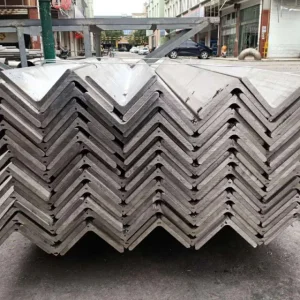
Heavy-duty structural, elevator, and lifting solutions manufactured to ISO 2408 and EN 12385 standards.
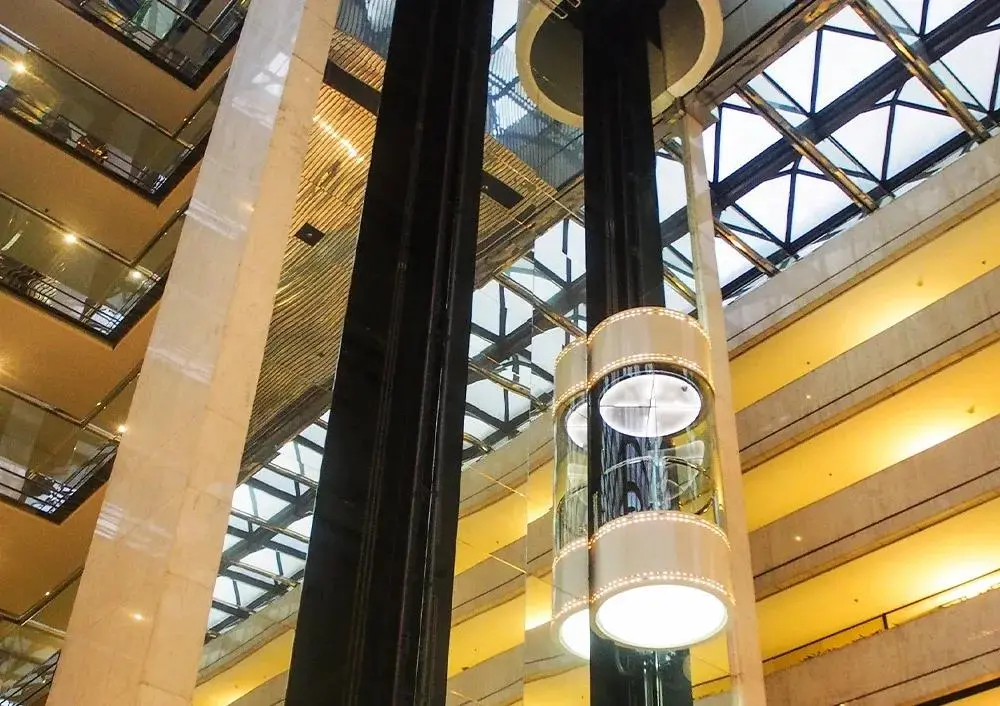
Seale & Warrington 8x19 & 9x19 structures. Optimized for high-rise residential & commercial shafts across Kathmandu Valley, delivering superior bend fatigue performance and low stretch.
Request Specs & Quote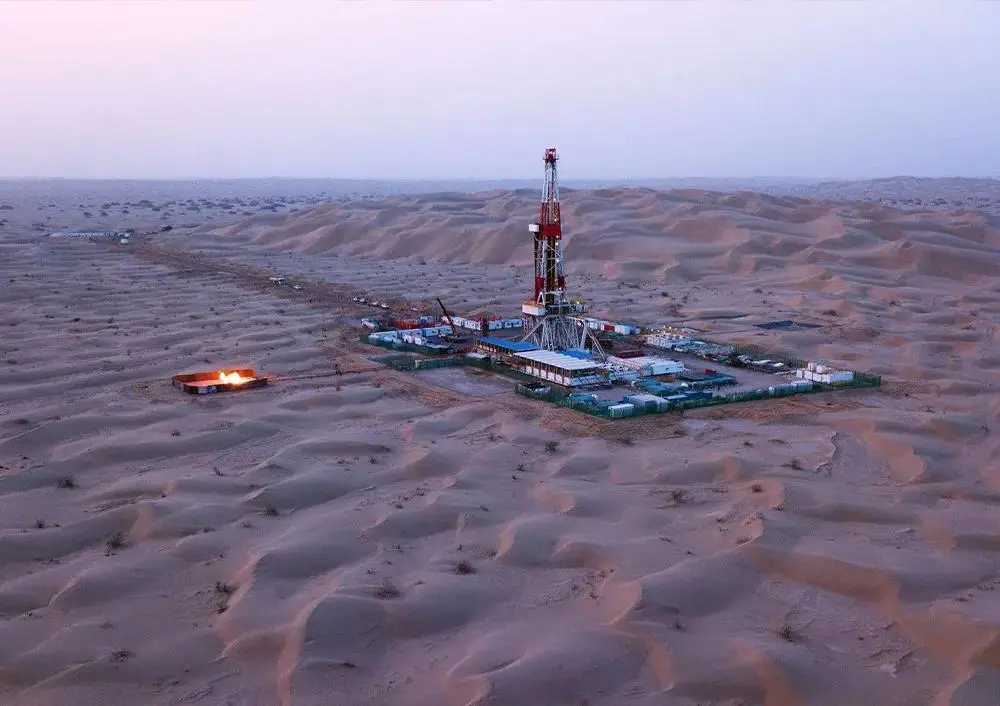
EIP class steel core (IWRC) ropes engineered for high-stress borehole drilling, Himalayan slope stabilization, and foundation piling rigs operating in complex geology.
Request Specs & Quote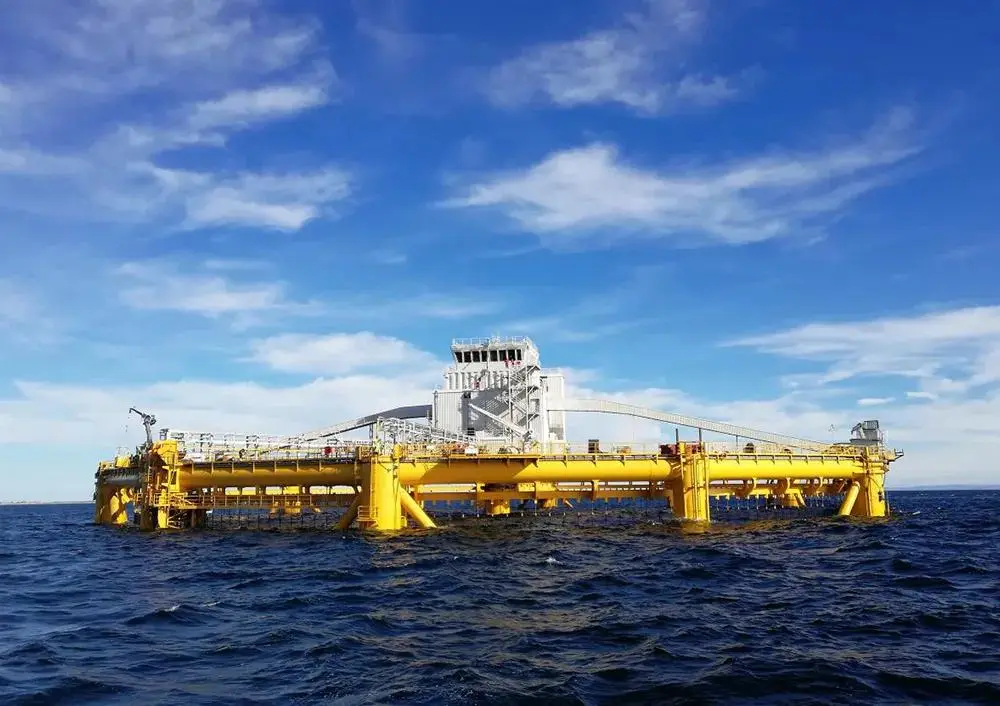
Multi-strand and compact strand wire ropes built to handle heavy tensioning in Himalayan dam construction, sluice gate hoisting, and torrent hydro projects across Nepal.
Request Specs & Quote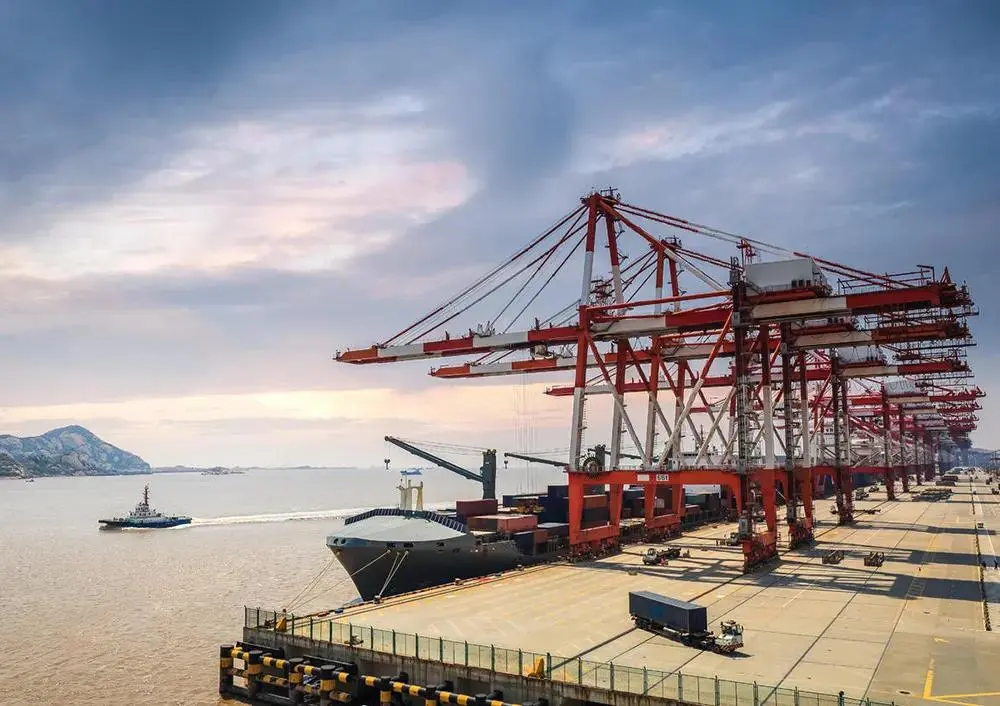
Engineered for mobile cranes, tower cranes, and Chobhar Dry Port cargo handling. Excellent resistance to radial pressure, crushing, and abrasive wear.
Request Specs & QuoteComprehensive technical analysis on structural integrity, material selection, and high-altitude microclimatic durability.
Kathmandu, situated at an elevation of approximately 1,400 meters above sea level in the intermontane basin of the Himalayas, presents a rigorous environment for industrial steel wire ropes. The region experiences intense ultraviolet (UV) radiation due to elevated altitude, paired with sharp seasonal contrasts: intense monsoon precipitation (averaging over 1,400mm annually) with relative humidity exceeding 85%, followed by dry, high-dust winter months.
Standard carbon steel wire ropes deployed in Nepal’s infrastructure—such as suspension bridges, passenger cable cars, hydropower intake gates, and urban construction cranes—face aggressive atmospheric oxidation and fretting corrosion. The combination of high UV exposure and atmospheric moisture accelerates micro-pitting in ungalvanized strands, leading to premature fatigue failure. To guarantee structural longevity, engineering projects across Kathmandu, Lalitpur, and Bhaktapur require specialized Hot-Dip Galvanized (HDG) Steel Wire Ropes and Extruded Plastic-Coated Wire Ropes (PVC, PE, Polyurethane) engineered with heavy zinc mass coverage (Class A/ISO 10244-2) and UV-stabilized polymer matrix coatings.
The economic expansion of the Kathmandu Valley has shifted local procurement requirements toward high-specification tensioning cables and hoisting gear. Key industrial growth vectors in Nepal include:
Nepal’s massive hydroelectric push along river basins (Trishuli, Marshyangdi, Bhotekoshi) relies on heavy-gauge galvanized ropes for spillway gate control, trash rack cleaning winches, and temporary cableways under continuous immersion.
Passenger and freight ropeway transportation—such as the Chandragiri Hills Cable Car and mountain cargo links—demands non-rotating, low-vibration, high-fatigue multi-strand wire ropes with compacted strands for minimal sheave wear.
Nepal's famous trail networks and gorge crossovers depend heavily on structural galvanized steel wire ropes (7x7, 7x19, 6x36 IWRC) designed for high static load resistance and 30+ year service life without sacrificial breakdown.
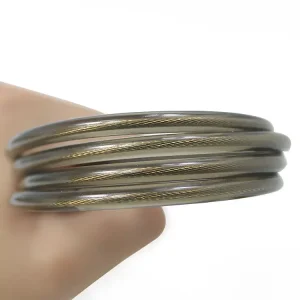
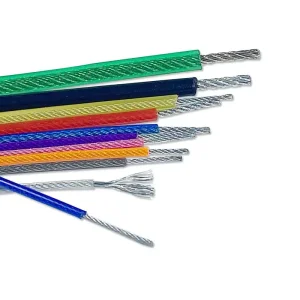
For applications where wire ropes are subjected to abrasive silica dust, chemical friction, or direct outdoor handling in Nepal, plain galvanized strands are encased in high-density synthetic jackets. Choosing the correct polymer sheath is vital for structural reliability:
| Polymer Coating Type | Durometer Hardness | Temperature Range | UV & Climate Resistance | Primary Application in Kathmandu |
|---|---|---|---|---|
| Polyvinyl Chloride (PVC) | Shore A 80 - Shore D 50 | -15°C to +65°C | Good (with UV additives) | Architectural railings, boundary fencing, general winch line protection, agricultural trellising. |
| Polyethylene (PE / HDPE) | Shore D 60 - Shore D 65 | -40°C to +80°C | Excellent (High UV stability) | High-altitude suspension bridges, cableway support lines, exposed outdoor hoisting systems. |
| Polyurethane (PU / TPU) | Shore A 90 - Shore D 75 | -30°C to +90°C | Superior Abrasion & Tear | Heavy logging winches, mining hoists, severe abrasion sheaves, high-duty construction cranes. |
Hot-Dip Galvanizing vs. Electro-Galvanizing: For Kathmandu’s outdoor and industrial exposure, cold (electro) galvanizing provides insufficient zinc thickness (typically <15 g/m²). Shanghai Mei Shen Industrial manufactures wire ropes using high-purity hot-dip galvanization processes, applying 110 g/m² to 300 g/m² of 99.995% pure zinc layer according to EN 10244-2 Class A standards. This provides sacrificial cathodic protection that prevents rust even if the wire outer surface experiences minor abrasion.
Procuring heavy steel wire rope in Nepal often presents logistics challenges due to landlocked geographical conditions. Shanghai Mei Shen Industrial Co., Ltd. (established in 1999 with a state-of-the-art manufacturing plant in Jiangsu Province) provides seamless B2B supply chain solutions to Kathmandu contractors and engineering firms:
Nepalese engineering bids and international EPC contracts (FIDIC based) executed in Kathmandu require strict compliance with rigorous metallurgical and mechanical testing protocols. Every reel of wire rope produced by Shanghai Mei Shen Industrial undergoes multi-stage quality checks:
Destructive tensile testing on full-size wire rope samples using 1000-ton horizontal tensile test beds to verify minimum breaking force (MBF) compliance.
Mandatory 720-hour neutral salt spray (NSS) testing and zinc layer bending test to ensure no cracking or flaking occurs during high-flex sheave operations.
In-line NDT inspection to detect internal wire breaks, core deformities, or strand void anomalies prior to reel winding and export packaging.
Explore our complete product lineup serving Kathmandu and global industrial projects.
 Mei Shen STEEL