Connectors for lifting and towing
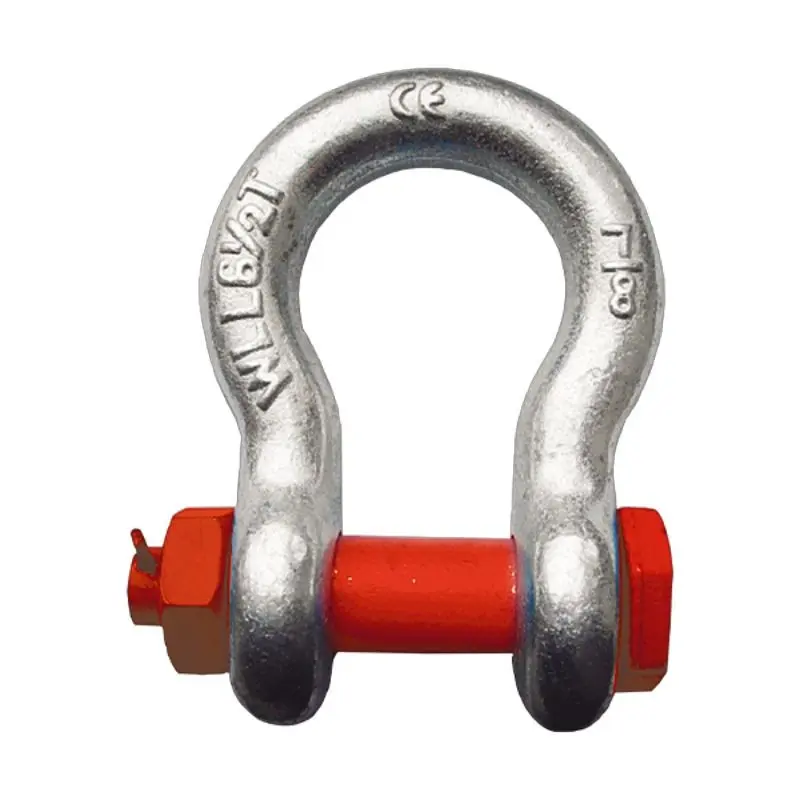
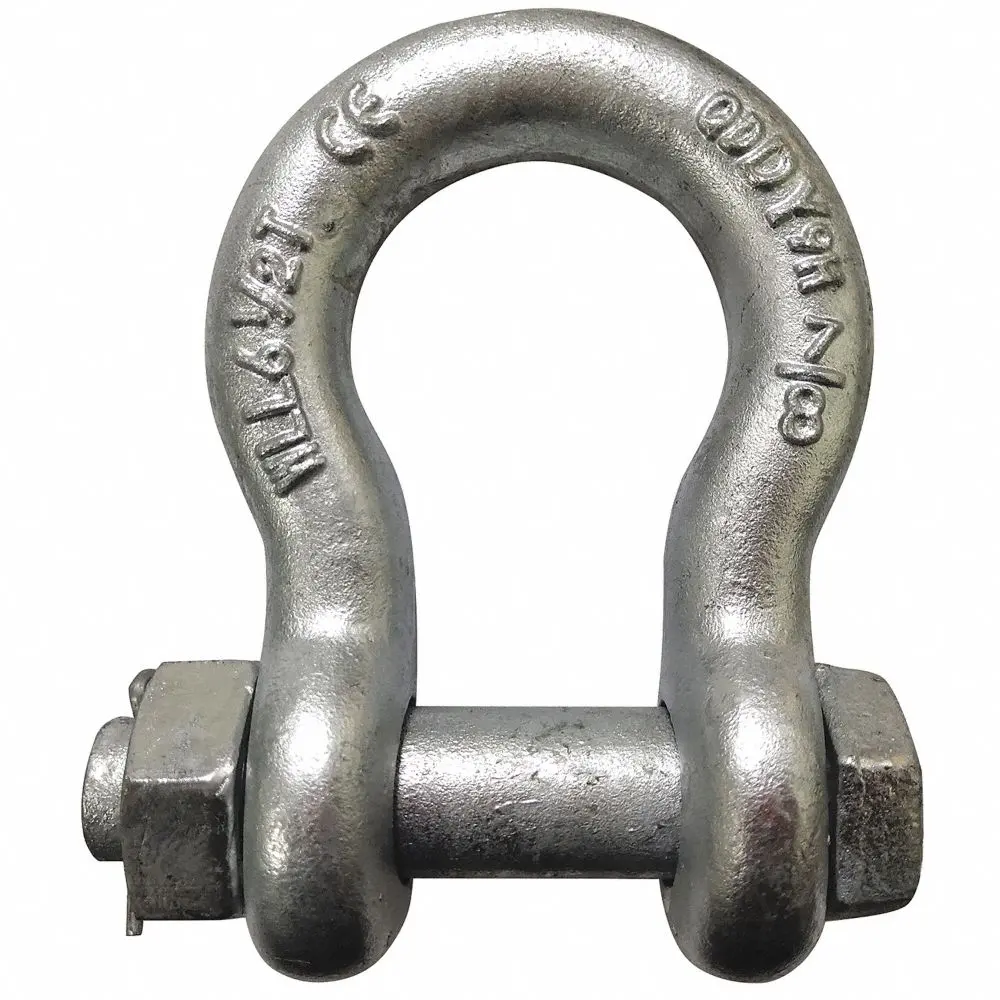
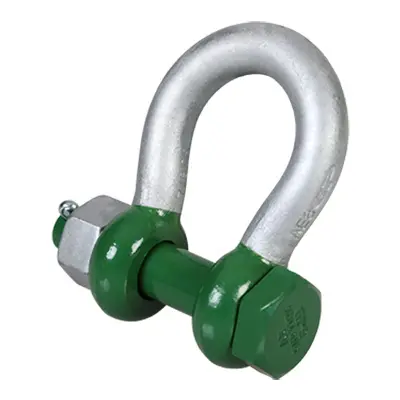
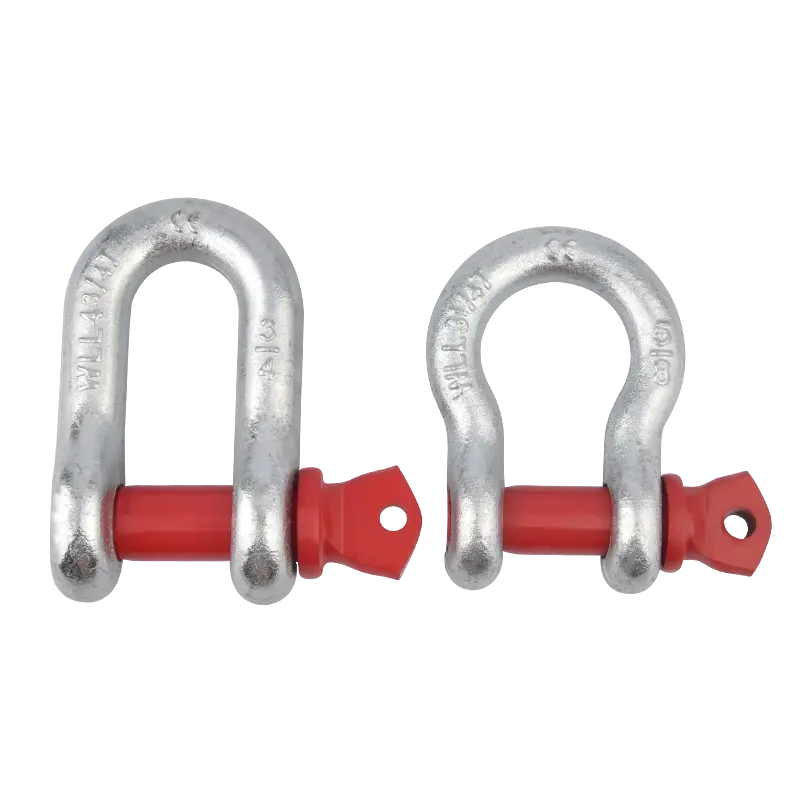
The bow shackle is a metal connection device, named for its bow-and-arrow shape. It is also known as a horseshoe shackle, B-type shackle, or bow-shaped clasp, and is primarily used in lifting and towing operations. It consists of a bow-shaped body, bolt pin, and nut. Made of high-strength alloy steel, stainless steel, and other materials, it is hot-dip galvanized or electroplated for corrosion resistance.
⚙️
Standards: Categorized into National, American, and Japanese standards.
🛡️
Safety: Features safety factors ranging from 4x to 6x.
🏗️
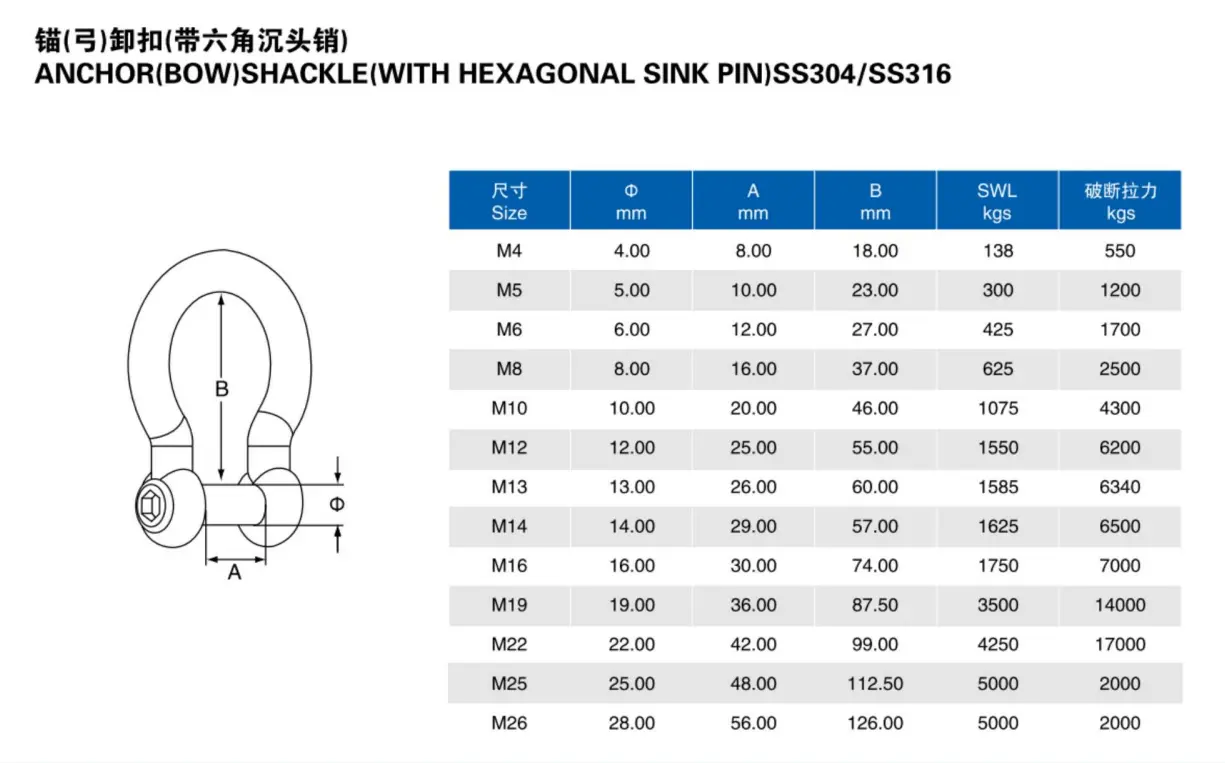
Capacity: Rated loads from 0.33 tons to 150 tons (max size exceeds 1000 tons).
🌊
Versatility: Suitable for marine and land applications like power generation, metallurgy, and construction.
This device features a circular design that reduces stress concentration compared to D-type shackles and accommodates multi-directional loads. Available types include bow-shaped shackles without female members (Omega-shaped) and bow-shaped shackles with female members. When using, strictly follow the working load limit, regularly check for deformation, cracks and wear, and keep the pins clean and lubricated.
Frequently Asked Questions
1. What materials are used to manufacture bow shackles?
They are typically made from high-strength alloy steel or stainless steel, and finished with hot-dip galvanizing or electroplating for enhanced corrosion resistance.
2. Why is the circular design of a bow shackle advantageous?
The bow shape reduces stress concentration compared to D-type shackles and allows the device to accommodate multi-directional loads more effectively.
3. What are the common industry standards for these shackles?
Bow shackles are generally categorized into three main production standards: National standard, American standard, and Japanese standard.
4. What is the load capacity range for bow shackles?
Rated loads typically range from 0.33 tons to 150 tons, though specialized heavy-duty versions can exceed 1000 tons.
5. In which industries are bow shackles most commonly used?
They are widely used in power generation, metallurgy, machinery, construction, and both marine and land-based towing or lifting operations.
6. What maintenance is required for safe operation?
Users should strictly adhere to the working load limit, perform regular inspections for cracks or deformation, and ensure the pins remain clean and well-lubricated.
 Mei Shen STEEL