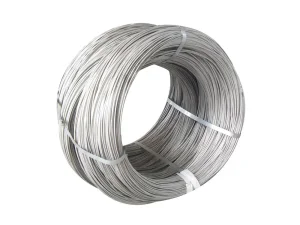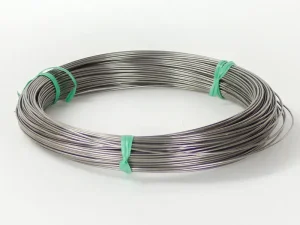
Wholesale High strength galvanized steel wire rope 1770Mpa, 8x19S+FC Supplier, Factory

Drawing galvanized standard steel wire rope for a wide range of applications such as cargo wheels, hoisting, luffing, mooring, hauling, anchoring, etc. It is also suitable for making wire rope slings for lifting operations.

The best combination of flexibility and wear resistance. Parallel laying structure, long service life.

The structure complies with EN 12385 standard.

Product Description

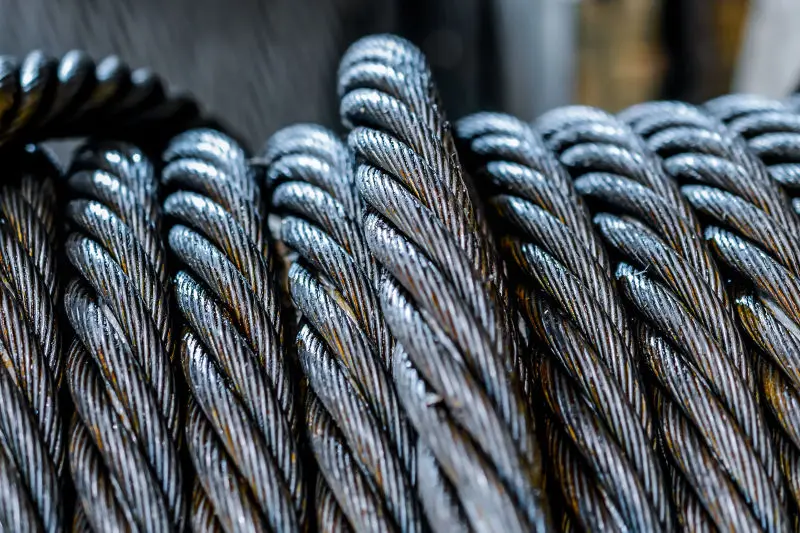
Port Lifting Scene

Hoisting Steel Wire Rope

Lifting Wire rope is a vital load-bearing and traction component in lifting machinery. Its main function is to lift, pull, tighten and carry heavy objects.

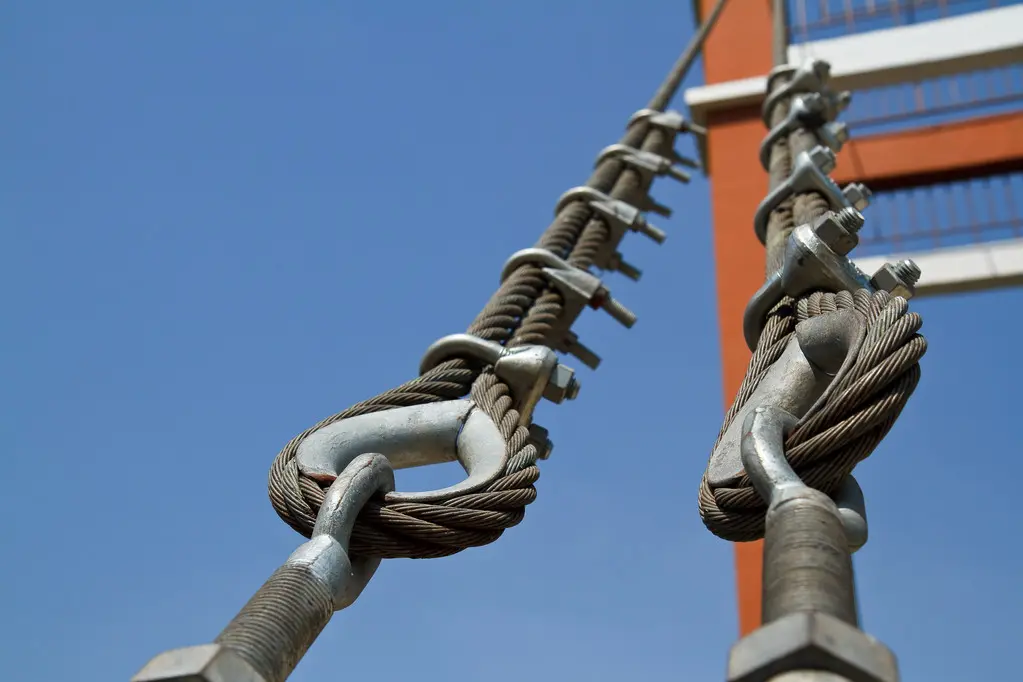
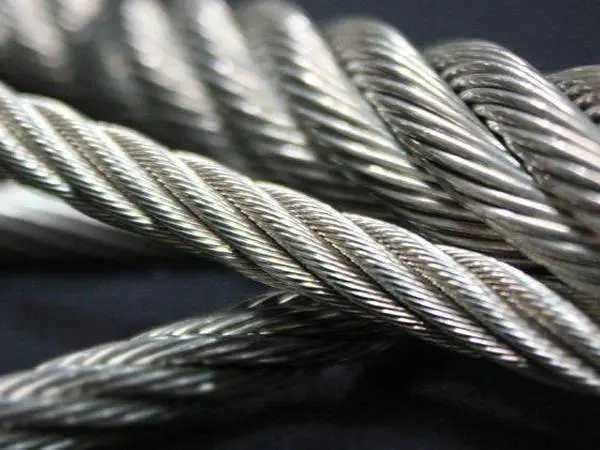
Wire Rope Detail 1
Wire Rope Detail 2

Features

  • Compaction: -
  • Rope core: IWRC
  • Strength grade: 1770Mpa / 1960Mpa / 2160Mpa
  • Twist type: Same direction or alternating twist
  • Twist direction: RH or LH
  • Surface condition: Smooth or galvanized

👍 Advantages

  • Wire rope structure is applicable and stable
  • Fully lubricated during production for enhanced durability

🚗 Applications

Engineering Crane
Port Crane
Industrial Crane
Offshore Crane
Winch
Drilling Platform

Scrapping Standards & Safety

When should crane wire ropes be scrapped?

A wire rope should be scrapped if it meets any of the following conditions:

  • Broken wires in one twist exceeds 10% of total wires.
  • Outer wire wear exceeds 40% of the original diameter.
  • Lifting hazardous goods: Scrapping threshold is halved compared to general equipment.
  • Wire rope diameter is reduced by 7% or more.
  • Entire strand is broken, fiber core is exposed, or cage-like deformation occurs.

Key Points for Replacement

  • Specifications: Use qualified original design models, diameters, and nominal tensile strength.
  • Diameter Tolerance: If original is <20mm, difference should not exceed 1mm; if >20mm, difference should not exceed 1.5mm.
  • Handling: Avoid knotting during winding. Knotted ropes wear and break significantly faster.
  • Integrity: It is forbidden to connect two separate wire ropes within the lifting mechanism.

8x19S+FC Specification

Nominal rope diameter (mm) Approx. weight (kg/100m) Minimum breaking load (kN)
Dual tensile (MPa) Single tensile (MPa)
1320/1770 1370/1770 1570/1770 1570 1620 1770
6.313.516.417.419.118.318.820.6
821.826.528.130.829.430.433.2
927.5-35.638.937.3-42.0
9.530.737.339.743.641.542.846.8
1034.041.344.048.146.047.551.9
1141.150.053.258.155.757.462.8
1249.059.563.369.266.268.474.7
1357.569.874.381.277.780.287.6
1466.681.086.194.290.293.0102
1687.0106113123118122133
18110134142156149154168
20136165176192184190207
22165200213233223230251

Technical Data: Allowable Tolerance

Steel wire rope Ø (allowable tolerance)
Zero load: With load (10% of Fmin):
Maximum 3% (for < 10mm) Minimum -1%
Maximum 2% (for > 10mm) Minimum -1% (for > 10mm)

Frequently Asked Questions (FAQ)

What are the primary applications for these wire ropes?
They are extensively used in various lifting mechanisms, including engineering cranes, port cranes, industrial cranes, offshore platforms, winches, and drilling platforms.
What is the critical wear limit for scrapping a wire rope?
A wire rope must be scrapped if the wear of the outer wires exceeds 40% of the original diameter, or if the total diameter of the rope has reduced by 7%.
Why is the IWRC core significant in hoisting ropes?
IWRC (Independent Wire Rope Core) provides better support to the outer strands, offers higher strength, and provides greater resistance to crushing when the rope is wound on a drum under high tension.
Can I use a wire rope with a different diameter than the original design?
It is highly recommended to use the original design diameter. However, minor differences are allowed: up to 1mm for ropes under 20mm, and 1.5mm for ropes over 20mm, provided the total breaking force matches the original specs.
What should be avoided when installing new wire ropes?
It is crucial to prevent the rope from knotting during installation. Additionally, you should never connect two separate wire ropes together within the lifting mechanism.
Are these wire ropes protected against corrosion?
Yes, these ropes are fully lubricated during production and are available in both smooth and galvanized surface conditions to suit different operational environments.

Related Products