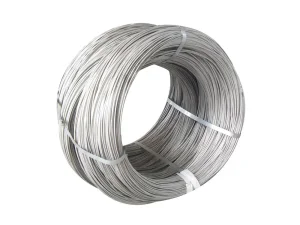
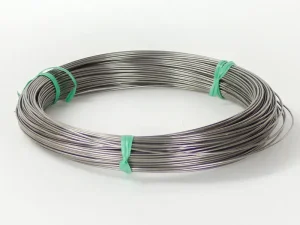
Hoisting Steel Wire Rope (6xK36WS + IWRC)
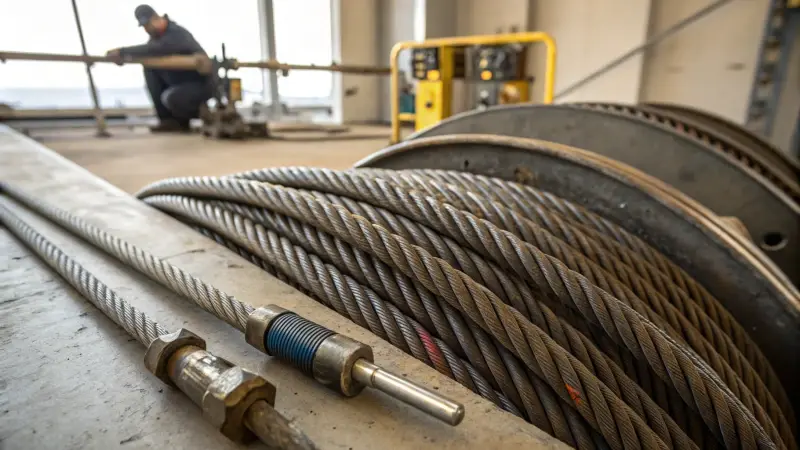
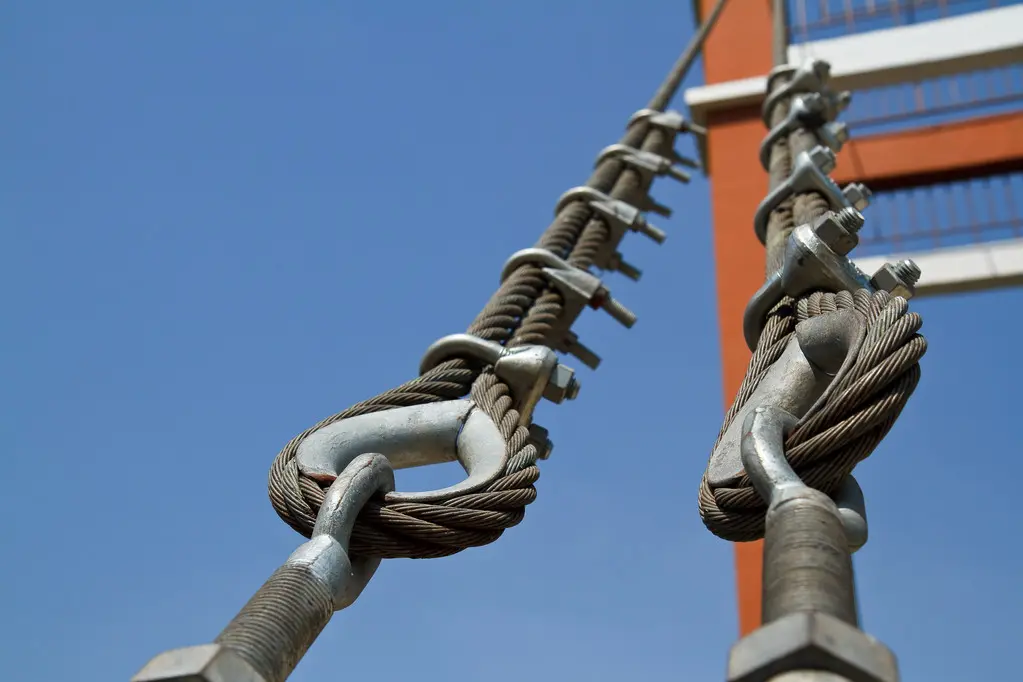
Drawn galvanized steel wire rope with tight strands (not resistant to rotation) for a wide range of applications such as cargo wheels, lifting, luffing, mooring, traction, anchoring, etc. It is also suitable for making wire rope slings for lifting operations.
The independent steel wire rope core (IWRC) provides higher strength and stability to the rope compared to fiber core. Parallel lay structure ensures a long service life. The overall structure complies with EN 12385, utilizing compacted steel strands.
🚀 Benefits of Compacting Process
The compacting process offers significant advantages for the performance and service life of ropes and equipment, including improved resistance to drum crushing, corrosion, and shock loads.
Note: For high lifting heights, high speeds, or multiple layers of spooling, steel core ropes or anti-rotation ropes (such as 35x7) are preferred due to higher compressive and rotational resistance.
Main Applications
✔ (1) Engineering crane
✔ (2) Port crane
✔ (3) Industrial crane
✔ (4) Offshore crane
✔ (5) Winch
✔ (6) Drilling platform
Scrapping Criteria
A wire rope must be scrapped if it meets any of the following conditions:
✘ Broken wires in one twist exceed 10% of total wires.
✘ Outer wire wear exceeds 40% of the original diameter.
✘ Wire rope diameter is reduced by 7%.
✘ Entire strand is broken or the fiber core is exposed.
✘ Hazardous goods lifting ropes reaching half of general scrap limits.
Key Points for Replacement
When replacing wire ropes for lifting machinery:
❶ Use qualified original design models, diameters, and nominal tensile strength.
❷ If diameter differs, total breaking force must match original design; diameter difference should not exceed 1mm (for ropes <20mm) or 1.5mm (for ropes >20mm).
❸ Ensure the rope does not become knotted during winding; knotted ropes are highly prone to premature failure.
6xK36WS Compacted (IWRC) Specification
| Nominal diameter |
Approximate weight |
Min Breaking Load (1960N/mm2) |
| mm |
kg/m |
KN |
| 6 | 0.17 | 30.9 |
| 6.4 | 0.19 | 34.7 |
| 7.9 | 0.28 | 53.3 |
| 8 | 0.29 | 53.8 |
| 9 | 0.37 | 65.5 |
| 9.5 | 0.41 | 78.3 |
| 10 | 0.45 | 84 |
| 11 | 0.55 | 102 |
| 11.1 | 0.56 | 106 |
| 12 | 0.65 | 122 |
| 12.7 | 0.73 | 136 |
| 14 | 0.89 | 167 |
| 14.3 | 0.93 | 172 |
| 16 | 1.16 | 210 |
| 18 | 1.47 | 267 |
| 19 | 1.64 | 301 |
| 20 | 1.82 | 335 |
| 22 | 2.2 | 402 |
| 22.2 | 2.24 | 411 |
| 24 | 2.62 | 485 |
| 25.4 | 2.93 | 540 |
| 26 | 3.07 | 560 |
| 28 | 3.56 | 650 |
| 28.6 | 3.72 | 670 |
| 30 | 4.09 | 750 |
Frequently Asked Questions
Q1: What are the benefits of compacted strands in wire ropes?
A: Compacting increases the steel fill factor, providing a smoother surface that reduces wear on drums and sheaves. It also improves resistance to crushing and internal corrosion.
Q2: Why is IWRC (Independent Wire Rope Core) better than fiber core?
A: IWRC provides significantly higher breaking strength and better structural stability, especially under high temperatures or heavy crushing loads where fiber cores might collapse.
Q3: How often should I check the diameter of my crane wire rope?
A: Regular inspections should be conducted. If the diameter reduces by 7% or more from the nominal size, the rope must be scrapped according to safety standards.
Q4: Can I replace a wire rope with a thicker one than originally designed?
A: It is not recommended. If the rope is too thick, it will cause excessive friction and rubbing against adjacent wraps on the drum, leading to rapid wear and potential failure.
Q5: What is the significance of the 6xK36WS structure?
A: This structure features 6 outer strands with 36 wires each, combining flexibility with high wear resistance, making it ideal for heavy-duty hoisting and port applications.
Q6: What should I do if the wire rope becomes knotted during installation?
A: Knotted wire ropes are structurally compromised and most likely to break under load. Knotted sections should never be used in lifting mechanisms and must be replaced.
 Mei Shen STEEL