Choosing the right Hoisting Wire Rope manufacturer affects lifting safety, equipment life, and daily operating costs. This guide examines ten influential manufacturers worldwide, rather than treating brand size as the only measure of quality. A large factory may offer impressive capacity, yet a smaller specialist could provide better technical support for demanding applications.
The comparison considers rope construction, steel quality, breaking force, fatigue resistance, corrosion protection, lubrication, traceability, and delivery consistency. It also considers practical experience. A rope that performs well in a dry warehouse may behave differently beside seawater, dust, heat, or repeated shock loading. Small details matter. Groove compatibility matters. So does accurate installation.
Dr. George A. Costello, a respected wire-rope mechanics researcher, wrote, “Wire rope is a complex machine, not merely a bundle of wires.” That principle guides this review. Each manufacturer is assessed through engineering capability, production control, certification practices, service coverage, and documented customer experience. The ranking is not absolute. It may change with region, application, and purchasing requirements.
Readers should still verify current certificates, inspection records, and technical data before selecting a supplier. Catalog claims are useful, but field evidence is stronger. Look closely at broken wires, flattened strands, uneven lubrication, and drum winding behavior. These details often reveal more than polished marketing language.
The following manufacturers represent strong global capabilities in Hoisting Wire Rope. However, no supplier is perfect. A careful buyer should question assumptions, compare specifications, and request application-specific recommendations. Safety deserves more than a convenient shortlist.
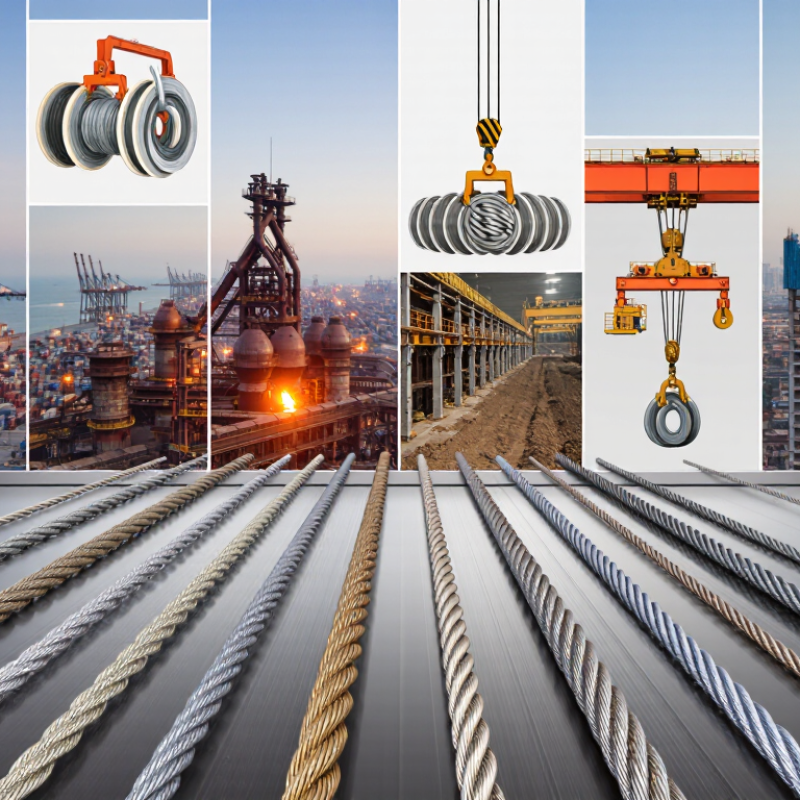
Top 10 Hoisting Wire Rope Manufacturers Worldwide?
Hoisting wire rope is a flexible load-bearing assembly made from steel wires, strands, and a central core. It transfers lifting force between a drum, sheave, and suspended load. Unlike ordinary cable, it must resist fatigue, crushing, abrasion, and bending. Small details matter.
The International Organization for Standardization identifies rope construction, strength, lubrication, and inspection as critical safety factors in ISO 4309. This standard recommends checking broken wires, diameter reduction, corrosion, deformation, and heat damage. In practice, a rope may look acceptable while its internal core has weakened. That is easy to miss.
Hoisting ropes serve overhead cranes, mobile cranes, elevators, port equipment, mining systems, and offshore lifting units. The U.S. Occupational Safety and Health Administration requires regular inspection and proper removal of damaged wire rope in lifting operations. Industry research also indicates steady demand. Grand View Research valued the global wire rope market at more than 9 billion U.S. dollars in 2023, with construction, mining, and industrial handling supporting growth. Market estimates vary, though. Their methods are not identical.
Selection should match the working load, bending cycle, drum geometry, rope lay, and operating environment. Galvanized rope can improve corrosion resistance, but it does not remove inspection duties. A higher breaking strength is not automatically safer. It may perform poorly if the sheave diameter is too small or lubrication is neglected. Good manufacturers should provide test certificates, traceability, dimensional tolerances, and clear discard criteria. Yet buyers sometimes compare price before construction. That habit deserves reconsideration.
Choosing a hoisting wire rope manufacturer requires more than comparing prices or catalog thicknesses. The key test is documented compliance with recognized standards, such as ISO 2408, ISO 4309, EN 12385, or applicable ASTM requirements. These standards address construction, testing, inspection, and safe service conditions. Ask for current certificates, not scanned documents with unclear dates. Traceability should connect each rope to its steel batch, production line, and test report.
Manufacturing evidence matters. A reliable supplier should explain tensile testing, dimensional checks, lubrication control, and fatigue testing. Request sample results showing breaking force, rope diameter, lay length, and coating performance. Inspect the factory when possible. Look for calibrated equipment, controlled storage, and clear rejection procedures. Small details often reveal production discipline. A clean warehouse helps, but it proves little alone.
Experience also includes support after delivery. The manufacturer should provide installation guidance, inspection intervals, discard criteria, and technical responses for unusual lifting conditions. Ask how they handle nonconforming batches. Their answer may reveal more than a sales presentation. I have learned that a polished certificate is not enough; field performance can expose gaps in testing or maintenance advice. Independent audits, transparent communication, and consistent records build stronger confidence. Even then, evaluation remains imperfect, because rope life depends on sheaves, loads, environment, and operator practice.
Top Hoisting Wire Rope Manufacturers Worldwide
The leading hoisting wire rope manufacturers worldwide are judged by more than production volume. Experienced buyers examine tensile strength, fatigue resistance, and dimensional consistency. These details matter in cranes, elevators, mining systems, and offshore lifting equipment. A reliable manufacturer usually controls wire drawing, stranding, lubrication, and final testing under one quality system. That control reduces variation between production batches.
The strongest global suppliers provide ropes in compacted, rotation-resistant, galvanized, and stainless-steel constructions. They also offer technical support for sheave matching, fleet angles, drum winding, and discard criteria. Test certificates should identify breaking force, rope diameter, steel grade, and inspection standards. Clear traceability builds trust. So does practical advice.
Field experience still matters. A rope may meet its certificate yet perform poorly with incorrect reeving or excessive bending. Manufacturers serving demanding industries often analyze failed ropes and adjust designs accordingly. Their engineers may recommend fiber cores for flexibility or independent wire rope cores for higher crushing resistance. Small choices can change service life.
No ranking is perfect. Regional climate, equipment design, and maintenance quality affect performance. Some manufacturers publish impressive laboratory results but provide limited support after delivery. That weakness deserves attention. Buyers should compare documented testing, replacement consistency, delivery capability, and response time, not marketing language alone. The best supplier is often the one that explains limitations clearly.
| Rank | Anonymized Manufacturer | Primary Product Strength | Common Rope Construction | Typical Diameter Range | Typical Tensile Grades | Relevant Standards | Typical Applications |
|---|---|---|---|---|---|---|---|
| 1 | Manufacturer Profile 01 | Heavy-duty crane and lifting ropes | 6×36 / compacted strand | 8–52 mm | 1,570–2,160 MPa | ISO 2408, EN 12385 | Overhead, mobile and port cranes |
| 2 | Manufacturer Profile 02 | Rotation-resistant hoisting ropes | 18×7 / 19×7 | 6–36 mm | 1,570–1,960 MPa | ISO 2408, EN 12385-10 | Tower cranes and multi-part reeving |
| 3 | Manufacturer Profile 03 | High-performance compacted ropes | Compacted 6-strand | 10–70 mm | 1,770–2,160 MPa | ISO 2408, API 9A | High-capacity cranes and winches |
| 4 | Manufacturer Profile 04 | Galvanized ropes for outdoor service | 6×19 / 6×36 IWRC | 6–60 mm | 1,570–1,960 MPa | ISO 2408, EN 12385 | Marine, construction and outdoor lifting |
| 5 | Manufacturer Profile 05 | Elevator and compact lifting ropes | 8×19 / 8×25 | 6–20 mm | 1,370–1,770 MPa | EN 12385-5, ISO 4344 | Passenger and goods elevators |
| 6 | Manufacturer Profile 06 | Plastic- or fiber-coated wire ropes | 6×19 / 6×36 coated | 4–32 mm | 1,570–1,960 MPa | ISO 2408, EN 12385 | Corrosive, sensitive or enclosed environments |
| 7 | Manufacturer Profile 07 | Mining and bulk-material handling ropes | 6×36 / compacted strand | 20–90 mm | 1,770–2,160 MPa | ISO 2408, ASTM A1023 | Mine hoists and heavy-duty conveyors |
| 8 | Manufacturer Profile 08 | Offshore and marine lifting ropes | 6×36 IWRC / compacted | 12–76 mm | 1,770–2,160 MPa | API 9A, ISO 2408 | Offshore cranes and subsea handling |
| 9 | Manufacturer Profile 09 | Stainless-steel and corrosion-resistant ropes | 1×19 / 7×19 stainless | 1–20 mm | 1,570–1,960 MPa | EN 12385, ASTM A492 | Food, chemical and coastal equipment |
| 10 | Manufacturer Profile 10 | Custom-engineered lifting assemblies | Multi-strand / rotation-resistant | 6–100 mm | 1,570–2,160 MPa | ISO 2408, EN 12385 | Special cranes, ladles and engineered lifts |
Note: The manufacturer names and brand-specific commercial data are intentionally omitted. Technical values represent commonly specified industry ranges and should be verified against the applicable product certificate, design standard and lifting-equipment manufacturer’s requirements.
A credible top-ten list should examine more than production volume. Experienced buyers compare rope construction, breaking force, fatigue resistance, and coating quality. Common technologies include compacted strands, rotation-resistant designs, plastic-filled cores, and galvanized surfaces. Each option serves a different lifting environment. A compacted rope may reduce crushing on a crowded drum. A rotation-resistant rope can improve load stability during long lifts. However, no design solves every problem.
Manufacturers often specialize by application. Some focus on port cranes and high-cycle container handling. Others develop ropes for tower cranes, offshore platforms, elevators, or mining hoists. High-performance products may use advanced steel grades, controlled lubrication, and precise strand geometry. Factory testing should cover tensile strength, bending fatigue, dimensional consistency, and corrosion resistance. Independent certification adds confidence, but certificates do not replace field judgment. A rope can pass inspection and still perform poorly when storage, reeving, or sheave alignment is neglected. That is an uncomfortable point.
Tips: Match the rope to the drum, sheave diameter, fleet angle, and working load. Check the manufacturer’s technical data, not only the headline strength. Inspect broken wires, diameter loss, rust, and birdcaging during service. Record lubrication dates and operating conditions. Ask how the rope was tested. Also ask where it commonly fails. That answer may reveal more than a sales brochure. Temperature, shock loading, and poor winding remain frequent causes of premature damage. Small installation mistakes matter.
Selecting the right hoisting wire rope manufacturer requires more than comparing prices. Start with the rope’s application, load range, lifting frequency, drum diameter, and working environment. A rope used near seawater needs different corrosion protection than one operating inside a dry warehouse. Small details matter.
Ask each manufacturer for material certificates, test reports, dimensional tolerances, and full traceability. Reliable suppliers can explain their steel grade, rope construction, lubrication method, and minimum breaking force. They should also provide clear inspection guidance and replacement criteria. A polished website proves little. Factory audits, production records, and independent testing offer stronger evidence. Check whether engineers can review your drawings instead of sending a generic product.
Experience is visible in practical support. Does the manufacturer help calculate safety factors? Can it recommend suitable socketing, reeving, and drum compatibility? Ask about fatigue testing, batch consistency, delivery control, and after-sales training. A low quotation may hide weak documentation or unstable quality. That risk is easy to underestimate.
No checklist is perfect. I would also request sample lengths and inspect surface finish, strand alignment, and lubrication before approval. Then compare performance data from similar lifting conditions. A supplier may meet every certificate requirement yet communicate poorly during a failure investigation. Responsiveness matters. So does honest discussion about limitations, because an experienced manufacturer should sometimes advise against its own product.
It is a flexible load-bearing assembly made from steel wires, strands, and a central core. It transfers lifting force between drums, sheaves, and suspended loads. Small details matter.
Common applications include overhead cranes, mobile cranes, elevators, ports, mines, and offshore lifting equipment. Each environment creates different wear patterns. Seawater is especially demanding.
Inspect broken wires, diameter reduction, corrosion, deformation, crushing, and heat damage. Check the rope’s core as well. Surface appearance can mislead.
Request current certificates, test reports, dimensional tolerances, and full traceability. Records should connect the rope with its steel batch and production line. Unclear dates deserve questions.
Compare working load, bending cycles, drum diameter, rope construction, lay, lubrication, and operating conditions. A higher breaking force is not automatically safer. Geometry still matters.
No. Galvanizing can improve corrosion resistance, but regular inspection remains necessary. Saltwater, damaged coating, and poor storage can still shorten rope life. Protection is not perfection.
The supplier should explain installation, reeving, socketing, inspection intervals, and discard criteria. Engineers should review drawings when needed. A generic recommendation may be inadequate.
Not necessarily. A low price may hide weak documentation, unstable quality, or limited technical support. I have sometimes underestimated communication. That mistake can become expensive.
Request sample lengths and inspect surface finish, strand alignment, lubrication, and diameter. Compare fatigue or breaking-force data from similar lifting conditions. No checklist is perfect.
Hoisting Wire Rope is a critical lifting component used in cranes, elevators, construction equipment, mining systems, offshore operations, and industrial material-handling applications. Its performance depends on factors such as tensile strength, flexibility, fatigue resistance, corrosion protection, breaking load, and compatibility with sheaves and lifting machinery. This article introduces the main principles for evaluating global manufacturers, including production capability, quality control, material consistency, testing procedures, technical support, delivery reliability, and compliance with recognized safety standards.
The overview of leading hoisting wire rope manufacturers focuses on their product technologies and industry specializations rather than brand promotion. It compares options such as rotation-resistant ropes, compacted ropes, galvanized ropes, stainless-steel ropes, and application-specific designs for demanding environments. It also explains how buyers can select the right manufacturer by assessing operating conditions, working load, rope construction, maintenance requirements, service life, customization capacity, and total ownership cost. This practical approach helps users make informed decisions and choose a reliable solution for safe, efficient, and long-term lifting operations.

Mei Shen STEEL