What Are the Top 10 Types of Crane Ropes?

Time:2026-09-20 Author:Sophia
0%

Choosing the right Crane Ropes begins with understanding how steel, movement, load, and environment interact.

Industry reports from Grand View Research and Mordor Intelligence identify construction, mining, ports, elevators, and material handling as major wire-rope demand centers. Their market estimates differ, however. Definitions vary between crane ropes, elevator ropes, and general wire rope. That limitation matters.

According to ISO 4309:2017, rope inspection should consider broken wires, diameter reduction, corrosion, deformation, and other discard conditions. OSHA 29 CFR 1926.1413 also requires regular inspection of crane wire rope in applicable workplaces. These requirements show one practical truth. Rope selection is only part of safety.

Don Sayenga, a former Wire Rope Technical Board executive, described wire rope as “a machine made of many moving parts.” That idea remains useful. Each strand bends, slides, stretches, and works against neighboring strands. A rope may look bright outside while suffering internal damage.

This guide examines the top 10 types of Crane Ropes, including rotation-resistant, compacted, galvanized, stainless steel, and specialty lifting ropes. It compares construction, flexibility, breaking strength, corrosion resistance, and typical applications. Some choices are obvious. Others are not.

A heavier rope is not always better. A stronger rope can still fail when poorly reeved, under-lubricated, or incorrectly stored. The comparison also has limits, because operating speed, drum diameter, sheave condition, and duty cycle change performance. That is worth remembering. A clean specification sheet cannot replace experienced inspection and maintenance.
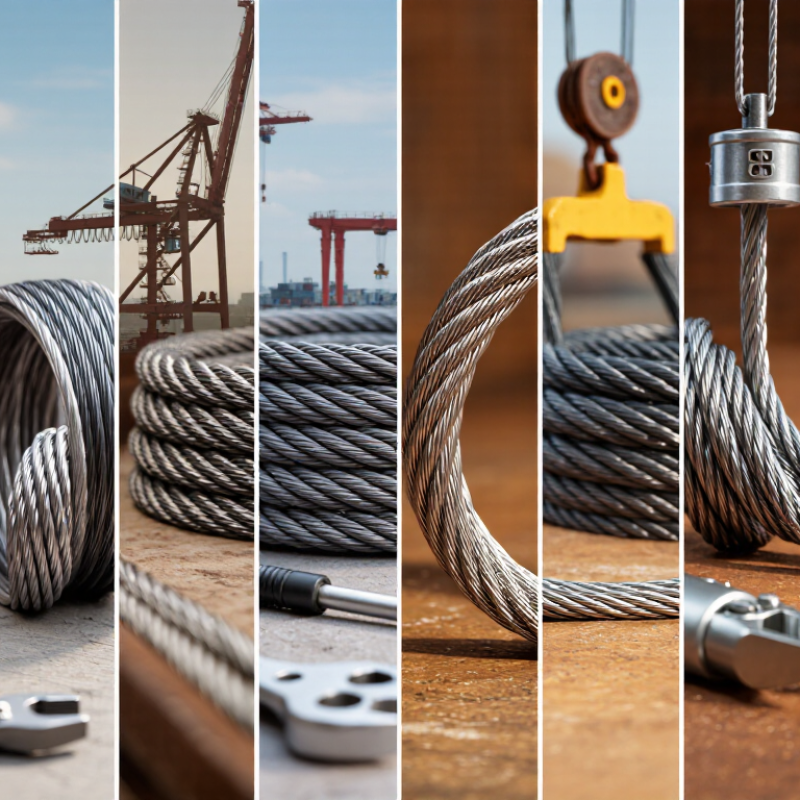
What Are the Top 10 Types of Crane Ropes?

Crane Rope Basics: Structure, Materials, and Performance

What Are the Top 10 Types of Crane Ropes?

Crane rope selection starts with structure, materials, and working performance. Common designs include 6×19, 6×37, 8×19, rotation-resistant, compacted, plastic-filled, galvanized, stainless-steel, non-rotating, and high-performance ropes. A 6×19 rope contains 114 visible strand wires, while a 6×37 design contains 222. More wires usually improve flexibility, but may reduce abrasion resistance. That trade-off matters.

Steel grade also changes performance. Galvanized ropes resist moisture better, while stainless steel suits corrosive environments. Fiber cores offer flexibility and crush resistance. Independent steel cores usually provide greater strength and heat tolerance.

ISO 2408:2017 defines key rope requirements, while ISO 4309:2017 provides inspection and discard guidance. ASME B30.30-2023 also stresses rope compatibility with drums, sheaves, and duty cycles.

BLS recorded 1,075 fatal occupational injuries in construction during 2023. That figure is not a rope-failure count, but it reinforces disciplined lifting controls. I still find rope selection too often reduced to breaking strength alone.

Tips: Measure drum grooves before ordering. Check lubrication inside the strands, not only on the surface. Record broken wires, birdcaging, crushing, and diameter loss. A rope can look acceptable while its core is already damaged. Follow the manufacturer-neutral limits in ISO 4309, and remove any rope showing severe distortion. Small inspection notes prevent expensive assumptions.

How Crane Ropes Are Classified by Design and Application

What Are the Top 10 Types of Crane Ropes?

How Crane Ropes Are Classified by Design and Application

Crane ropes are classified by construction, strand arrangement, and working duty. The ten common types include regular-lay, Lang-lay, rotation-resistant, non-rotating, compacted-strand, plastic-impregnated, galvanized, stainless-steel, flatten-resistant, and high-performance ropes. Regular-lay ropes handle general hoisting well. Lang-lay ropes offer better wear resistance when bending repeatedly. Rotation-resistant designs suit single-line lifting, where suspended loads may twist. Flatten-resistant ropes support multi-layer drum winding. High-performance ropes combine improved strength with reduced diameter, but they may demand stricter inspection.

Application changes the selection. Tower cranes often need rotation-resistant ropes for long, freely suspended loads. Mobile cranes may prioritize fatigue resistance during frequent boom movement. Overhead cranes commonly use compacted or plastic-impregnated ropes in repetitive factory cycles. Galvanized ropes perform better in damp outdoor environments. Stainless-steel ropes fit corrosive settings, though their higher cost can be difficult to justify. The boundary is not always clean. Some ropes fit several categories.

Tips: Check the manufacturer’s rope grade, diameter, lay direction, and drum compatibility before installation. OSHA 29 CFR 1926.1413 requires removal when a running rope has six randomly distributed broken wires in one rope lay, or three broken wires in one strand within one lay. ISO 4309:2017 also emphasizes documented inspection, lubrication, and discard criteria. A rope can look bright but still contain internal fatigue. That is where routine visual checks become imperfect. Record diameter loss, birdcaging, corrosion, and crushed sections. Small changes often deserve attention.

The Top 10 Types of Crane Ropes Explained

Crane ropes are selected by load, drum design, reeving pattern, and operating environment. A 2024 Grand View Research report valued the global wire rope market at about USD 6.7 billion in 2023. Lifting applications remain a major demand driver. The labels can overlap, which is easy to miss.

The first type is regular-lay rope, offering balanced handling and abrasion resistance. Lang-lay rope provides better wear performance when bending repeats often. Rotation-resistant rope limits twisting during single-part lifts. Non-rotating rope offers greater stability for tall, suspended loads. Compacted rope has flattened outer strands, increasing metal area and fatigue resistance. Plastic-impregnated rope seals lubricant inside the strand structure. It can reduce internal corrosion, but inspection becomes less obvious.

Galvanized rope suits humid or mildly corrosive workplaces. Stainless-steel rope handles demanding corrosion conditions, although it usually costs more. Bright rope offers a clean surface for indoor lifting and controlled environments. Multi-strand rope improves flexibility and shock absorption around small sheaves. ISO 4309:2017 requires systematic examination for broken wires, distortion, corrosion, and diameter loss. That guidance matters more than a catalog ranking. A rope can look acceptable while hiding internal damage. Field records, sheave measurements, lubrication history, and discard criteria should guide replacement decisions. I would not treat “high strength” as automatically safer. The wrong lay or construction can still produce rapid wear.

Choosing the Right Crane Rope for Operating Conditions

What Are the Top 10 Types of Crane Ropes?

Choosing the Right Crane Rope for Operating Conditions

Crane ropes work under very different conditions. A rope for an indoor bridge crane may fail quickly on a coastal construction site. Selection should match load, reeving, drum design, speed, bending, and temperature.

Common choices include bright wire rope, galvanized wire rope, stainless steel rope, rotation-resistant rope, non-rotating rope, compacted strand rope, swaged rope, flattened strand rope, plastic-coated rope, and synthetic fiber rope. These categories overlap in practice. A compacted rope can also resist crushing, while a galvanized rope mainly improves corrosion protection.

For heavy lifting, compacted or swaged ropes often provide strong contact with sheaves. Rotation-resistant designs suit single-part lines and suspended loads. Galvanized ropes help in damp environments, but saltwater still demands frequent inspection. Stainless steel handles corrosion better, although it may not offer the best strength for every crane. Synthetic ropes reduce weight and hand strain, but heat, abrasion, and sharp edges require careful control.

I have seen operators focus only on breaking strength. That is a risky shortcut. Check the rope diameter against the manufacturer’s rated data. Inspect for broken wires, birdcaging, crushed sections, corrosion, and unusual flattening. Feel the rope carefully, where safe, and examine the drum layers. Lubrication also matters, but excessive lubricant can hide damage. My own judgment is not perfect; site temperature, shock loading, and poor reeving can change the result. When doubt remains, remove the rope from service and request a competent inspection.

Inspection, Maintenance, and Replacement Considerations

What Are the Top 10 Types of Crane Ropes?

Inspection, Maintenance, and Replacement Considerations

Crane ropes may include standard 6x19, 6x36, rotation-resistant, non-rotating, compacted strand, plastic-filled, galvanized, stainless steel, flattened strand, and high-performance constructions. Each type reacts differently to bending, abrasion, crushing, and corrosion. Selection should match the crane’s lifting pattern, drum design, load frequency, and environmental exposure.

Inspection must follow the rope manufacturer’s guidance and the site’s risk assessment. Look for broken wires, flattened sections, birdcaging, corrosion, kinks, diameter loss, and damaged end connections. A thin wire can cut gloves. That detail matters. Measure rope diameter at consistent points with a calibrated tool, rather than relying only on visual judgment. Check sheaves and drums too, because sharp grooves can damage a new rope quickly.

Maintenance records should include installation date, operating hours, inspection findings, lubrication work, and unusual loading events. Use a lubricant suited to the rope and working environment. Excess lubricant can hide defects. That mistake is easy to make. Replacement is necessary when discard criteria are reached, even if the rope still appears usable. Never remove broken wires by hand. Secure the area, control stored energy, and use trained personnel for rope changes. A second inspection after installation can reveal poor spooling, incorrect reeving, or uneven tension before the crane returns to service.

FAQS

What factors determine the right crane rope?

Selection depends on load, drum design, reeving pattern, bending frequency, and workplace conditions. A small sheave can increase bending stress. The strongest option is not always the safest.

What is regular-lay rope used for?

Regular-lay rope offers balanced handling and good abrasion resistance. It suits many general lifting tasks. However, repeated bending may wear it faster than other constructions.

When is Lang-lay rope a practical choice?

Lang-lay rope can perform better where bending repeats frequently. Its strands contact more rope surface during bending. That benefit still depends on correct drum and sheave compatibility.

How do rotation-resistant and non-rotating ropes differ?

Rotation-resistant rope limits twisting during single-part lifts. Non-rotating rope provides greater stability for tall, suspended loads. Neither type removes the need for controlled lifting procedures.

What benefits can compacted or plastic-filled rope provide?

Compacted rope has flatter outer strands and more metal within its diameter. It may improve fatigue resistance. Plastic-filled rope can retain lubricant inside the strands and reduce internal corrosion. Inspection may become harder.

Which crane ropes suit wet or corrosive workplaces?

Galvanized rope suits humid or mildly corrosive environments. Stainless-steel rope handles more demanding corrosion conditions but usually costs more. Bright rope is better suited to clean, controlled indoor areas.

What should workers check during crane rope inspections?

Check for broken wires, kinks, birdcaging, corrosion, flattening, and diameter loss. Inspect end connections carefully. A thin wire can cut gloves. Measure diameter with a calibrated tool, not eyesight alone.

When should a crane rope be replaced?

Replace the rope when applicable discard criteria are reached. Do not rely on a clean-looking surface. Record installation dates, operating hours, lubrication, and unusual loading events. After installation, recheck spooling, reeving, and tension. A second inspection can catch a poor setup.

Conclusion

Crane Ropes are critical lifting components designed to carry heavy loads safely, efficiently, and repeatedly in demanding work environments. Their performance depends on construction, core design, wire material, strand arrangement, flexibility, strength, and resistance to fatigue, crushing, rotation, corrosion, and abrasion. This article introduces the basic structure and materials of crane ropes, then explains how they are classified according to design and application. It also presents the top ten types, including ropes suited for general lifting, high-strength operations, rotation-sensitive loads, compact spaces, and harsh outdoor conditions.

Selecting the right rope requires careful consideration of load weight, lifting speed, drum and sheave configuration, operating temperature, exposure to moisture or chemicals, and expected bending cycles. Proper inspection and maintenance are equally important. Regular checks should identify broken wires, corrosion, deformation, flattened sections, kinking, and unusual wear. Timely lubrication, correct installation, accurate storage, and replacement based on established safety limits help extend service life and reduce operational risks.


Sophia

Sophia

Sophia is a dedicated marketing professional with an exceptional depth of knowledge about her company's products and services. With a keen understanding of market trends and customer needs, she crafts insightful blog posts that not only inform but also engage readers, enriching the company’s online......