Choosing the right Drilling Wire Rope is a practical decision with serious safety and productivity consequences. The rope may appear simple on a storage reel, yet it carries repeated loads, shock forces, abrasion, and moisture during demanding drilling work. A poor choice can cause rapid wear, unstable lifting, unexpected downtime, or costly equipment damage. This guide examines seven useful selection tips for drilling contractors, maintenance managers, and equipment buyers.
The process begins with the application, not the supplier’s product list. Consider the drilling depth, working load, drum design, line speed, fleet angle, and operating temperature. Rope diameter matters, but it should match the sheaves and drum grooves precisely. Construction, lay direction, rotation resistance, core type, and breaking strength also deserve careful review. A rope that performs well on a vertical hoist may disappoint in a high-abrasion drilling environment. Small details matter.
Reliable selection also depends on documented quality. Check test certificates, material traceability, lubrication guidance, inspection procedures, and the manufacturer’s technical support. Experienced crews often notice flattened strands, broken wires, birdcaging, and unusual diameter loss before a serious incident occurs. However, inspection results are not always interpreted consistently. That weakness deserves attention. A clean calculation cannot replace regular field checks, competent operators, and a realistic safety factor. Environmental conditions may change faster than the original plan. These seven tips provide a practical framework, while reminding readers that every drilling site requires professional evaluation and disciplined maintenance.
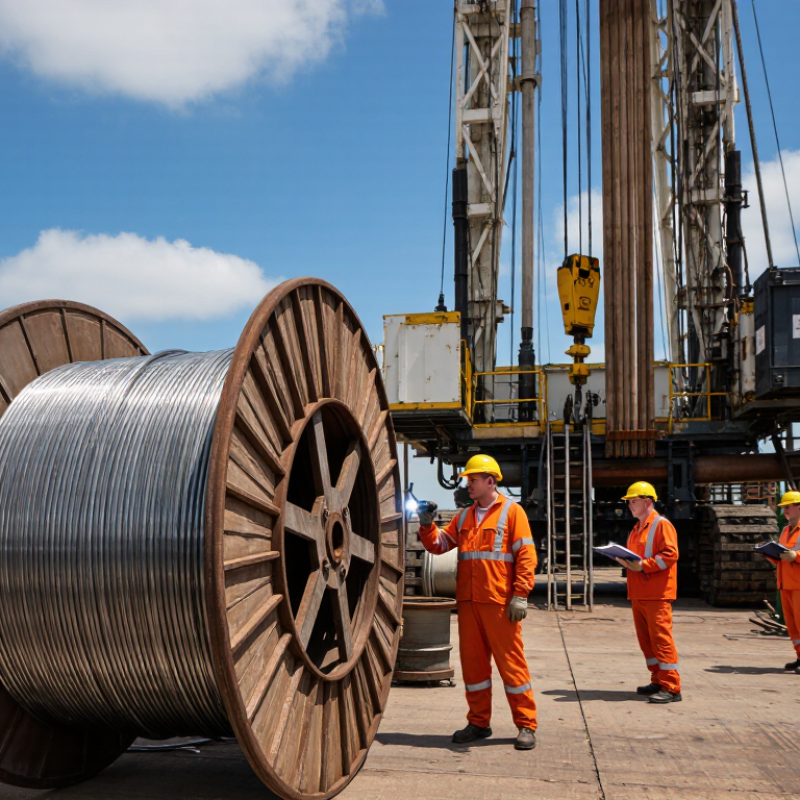
Tip 1: Identify the real drilling conditions before choosing wire rope. Measure well depth, suspended load, line speed, drum diameter, and fleet angle. These details control fatigue, crushing, and bending stress. A rope that performs well at moderate speed may fail sooner under rapid hoisting or repeated shock loads. Temperature, mud, saltwater, and abrasive cuttings also matter. Keep records from actual operations, not assumptions.
Tip 2: Match rope construction to the working pattern. Drilling lines often face frequent bending over sheaves, sudden loading, and limited inspection time. Select a construction with suitable fatigue resistance, strength, and resistance to crushing. Check the rope-to-sheave and rope-to-drum diameter ratios carefully. Small details matter. I have seen operators focus on breaking strength while overlooking poor fleet alignment. That mistake can shorten service life.
Tip 3: Build inspection into the operating requirement. Examine broken wires, corrosion, flattened strands, diameter loss, and unusual rotation. Use the applicable industry standard and the rope maker’s technical data for retirement criteria. Do not rely on appearance alone. A clean surface can hide internal damage, while light surface wear may not require immediate replacement. Record inspection findings and loading events. Review them when conditions change. Field judgment improves with evidence, but it is never perfect.
7 Tips for Choosing Drilling Wire Rope
Choosing the correct rope construction starts with the real duty cycle, not the catalog diameter. A drilling operation may combine heavy loads, repeated bending, vibration, and sudden acceleration. Six-strand constructions often provide a practical balance between strength and flexibility. More wires can improve bending performance, while fewer, larger wires may resist abrasion better. The choice is not always obvious.
Core type deserves equal attention. A fiber core offers flexibility and can run smoothly over smaller sheaves. However, it may compress under high pressure and tolerate less heat. An independent wire rope core usually provides greater strength, dimensional stability, and crush resistance. It can also make the rope feel less forgiving during tight bending. Small details matter.
Check the rope against drum grooves and sheave diameter before ordering. A mismatch can create flattened strands, uneven wear, and visible valley cracks. Confirm the working load, shock loading, rotation behavior, and operating temperature with a qualified rope engineer. Field inspectors should record broken wires, corrosion, diameter loss, and lubrication condition at regular intervals. Do not judge service life by appearance alone. A rope can look clean but carry hidden fatigue. I have seen specifications chosen around breaking strength while ignoring bending frequency. That decision often needs reconsideration. Keep installation records, inspection dates, and removal reasons; these details improve the next rope selection.
| Tip | Rope Construction / Core | Main Characteristics | Typical Drilling Applications | Advantages | Important Limitations |
|---|---|---|---|---|---|
| 1 | 6×19 with Fiber Core (FC) | Moderate flexibility with relatively large outer wires and good abrasion resistance. | General lifting, winch lines, and drilling equipment with moderate bending frequency. | Good resistance to external wear; commonly available in many diameters. | Lower crushing resistance and lower heat tolerance than steel-core ropes; not ideal for severe fleet angles. |
| 2 | 6×19 with Independent Wire Rope Core (IWRC) | Steel core supports the strands and provides higher dimensional stability than fiber-core designs. | Drilling winches, hoisting lines, and applications involving higher loads or drum crushing. | Higher breaking strength, better resistance to crushing, and improved performance at elevated temperatures. | Stiffer than fiber-core rope and may require larger sheaves to reduce bending fatigue. |
| 3 | 6×36 with IWRC | More wires per strand and smaller outer wires provide greater flexibility than 6×19 constructions. | Drilling lines that pass repeatedly over sheaves and drums, especially where bending fatigue is important. | Improved bending-fatigue resistance and good balance between flexibility and strength. | Smaller wires can be more vulnerable to abrasive wear and mechanical damage. |
| 4 | 8×19 with IWRC | Eight-strand construction offers good flexibility and a relatively smooth exterior profile. | Multi-layer drum systems, compact hoisting arrangements, and drilling equipment requiring smooth spooling. | Good flexibility and useful resistance to drum-layer contact and fleet-angle effects. | Performance depends strongly on correct reeving, drum design, and compatibility with the original equipment. |
| 5 | Rotation-Resistant 19×7 | Multiple layers are laid in opposing directions to reduce torque and rotation under load. | Single-line hoisting, long suspended loads, and drilling operations where load rotation must be controlled. | Reduces spinning of suspended loads and helps limit torsional transfer. | More sensitive to handling, crushing, and incorrect installation; generally requires careful inspection and reeving. |
| 6 | Non-Rotating 35×7 | Highly balanced multi-layer construction designed for very low rotation under load. | High-capacity hoisting and drilling systems where rotation control and vertical load stability are critical. | Excellent rotational stability and suitability for long, freely suspended loads. | Requires strict installation control, suitable sheaves and drums, and frequent inspection for localized damage. |
| 7 | Compacted-Strand Rope with IWRC | Strands are compacted to create a smoother surface, higher metallic area, and improved resistance to contact pressure. | Heavy-duty drilling and hoisting systems with high tensile loads, multi-layer spooling, or severe drum pressure. | High strength-to-diameter potential, improved crushing resistance, and better contact with sheaves and drums. | Can conceal internal damage; inspection methods, minimum bend-radius requirements, and termination procedures must follow the rope specification. |
Choosing drilling wire rope starts with the equipment, not a catalog photo. Check the winch manual, drum size, sheave grooves, and rated pull. These details define a workable rope. A strong rope may still fail through poor bending compatibility. Measure the existing rope before ordering. Record its diameter at several points, because crushing and wear can hide its original size. Small errors matter.
Match rope strength to the equipment’s maximum line pull, including shock loads and suspended weight. Use the required safety factor from the equipment documentation and site risk assessment. Do not select strength by intuition alone. Higher strength is not automatically better. An oversized rope may bend poorly, overload sheaves, or fail to seat correctly. During field checks, I look for broken wires, flattened strands, heat marks, and uneven lay. Stop when damage is unclear. A second inspection is cheaper than a rushed decision.
Diameter must fit the drum and grooves precisely. Too small a rope can slip or wear quickly; too large a rope can climb the groove. Length needs equal care. Allow enough rope for the deepest planned hole, safe drum wraps, and a practical anchoring tail. Leave working clearance, but avoid excessive spare length that crowds the drum. Recheck measurements after installation. Real equipment rarely matches drawings perfectly, and that is where careful judgment matters.
Choosing drilling wire rope requires more than checking diameter and breaking strength. In field inspections, I have seen ropes fail early because material quality received too little attention. Confirm the steel grade, heat treatment, and batch traceability. Ask for test records from a qualified laboratory. Inspect the wire geometry and core construction, because uneven strands can create local pressure during repeated bending.
A bright coating can mislead. Check whether it covers the valleys between wires, not only the outer surface. Measure coating thickness at several points. Test adhesion where practical, since flaking exposes fresh steel quickly. Match the coating to the working environment. Saltwater, acidic mud, and wet storage demand stronger corrosion resistance than dry drilling conditions. Look for pitting, reddish dust, and broken coating near sheaves. Small marks matter.
Do not rely on appearance alone. Compare supplier data with independent test results when the rope carries critical loads. I once accepted a clean-looking rope without checking storage history; that decision was poor. Moisture had entered the packaging, and corrosion appeared under the coating. Keep ropes dry, elevated, and lightly protected during storage. Record inspection dates and wear locations. Replace rope when corrosion, broken wires, or diameter loss exceeds the applicable safety limit. Field judgment helps, but it should never replace documented inspection criteria.
Choosing drilling wire rope requires more than comparing breaking strength. Match its construction with the rig’s load spectrum, bending cycles, sheave diameter, and rotation demands. API Specification 9A defines manufacturing and testing requirements. API RP 9B addresses drilling-line care, inspection, and service practices. Request mill certificates, test values, and traceable batch records. A certificate is evidence, not proof of field performance.
Safety standards should guide discard decisions. ISO 4309:2017 recommends documented inspections, diameter measurements, broken-wire assessments, deformation checks, and lubrication reviews. OSHA 29 CFR 1910.184 uses ten randomly distributed broken wires in one rope lay, or five in one strand, as removal thresholds for many wire-rope slings. Drilling applications need specific criteria, not blind copying. Check for birdcaging, crushing, corrosion, and localized wear. Stop early.
Service life depends on bending fatigue, mud, saltwater, heat, shock loading, and poor spooling. Record installed length, operating hours, cutbacks, measured diameter, and inspection findings. Clean before applying compatible lubricant; trapped grit can act like sandpaper. Maintenance intervals should follow condition data, not calendar habits. A bright rope may still contain internal corrosion. That is easy to miss. One weakness remains: crews often record replacement dates, but not the damage that caused replacement. Our records may be less complete than the rope.
Measure well depth, suspended load, line speed, drum diameter, and fleet angle. Temperature, mud, saltwater, and abrasive cuttings also affect service life.
Rapid hoisting creates greater bending and fatigue stress. Repeated shock loads can shorten rope life. Moderate-speed performance may not predict field performance.
Choose construction for repeated sheave bending, sudden loading, and crushing resistance. Check the rope-to-sheave and rope-to-drum diameter ratios carefully. Small details matter.
Poor alignment increases side pressure and uneven wear. It can shorten service life, even when breaking strength looks adequate. I might overlook this too.
Look for broken wires, corrosion, flattened strands, diameter loss, and unusual rotation. Inspect near sheaves and drum contact areas. Do not trust appearance alone.
Confirm steel grade, heat treatment, and batch traceability. Request laboratory test records when the rope carries critical loads. Uneven wire geometry can create local pressure.
Check coating coverage inside wire valleys, not only on the outer surface. Measure thickness at several points and inspect adhesion where practical. Look for pitting, reddish dust, and flaking near sheaves.
Keep it dry, elevated, and lightly protected during storage. Record inspection dates, wear locations, loading events, and storage conditions. Replace it when damage exceeds applicable safety limits.
Choosing the right Drilling Wire Rope is essential for safe, efficient, and reliable drilling operations. Start by assessing the working environment, including load cycles, lifting speed, shock loads, temperature, moisture, abrasion, and exposure to mud or chemicals. These conditions will help determine the most suitable rope construction and core type. Next, confirm that the rope’s strength, diameter, and length match the equipment’s specifications, drum capacity, sheave design, and expected working load. Proper compatibility can reduce wear, improve handling, and support consistent performance.
Material quality and protective coatings should also be carefully evaluated, especially when corrosion or harsh operating conditions are present. In addition, compare applicable safety standards, expected service life, inspection requirements, and maintenance needs. A rope that is easy to inspect, lubricate, and replace can help reduce downtime and operating risks. By considering these factors together, users can select a Drilling Wire Rope that offers dependable performance, long-term value, and safer drilling operations.

Mei Shen STEEL