What Is an Elevator Rope and What Types Are Available?

Time:2026-09-25 Author:Sophia
0%

An Elevator Rope is more than a steel line disappearing into a shaft. It carries the car, balances loads, and works with the traction system during thousands of daily starts and stops. The choice affects grip, fatigue life, vibration, and maintenance planning. Small differences matter.

Market growth adds context, but it does not determine which rope belongs in a lift. Fortune Business Insights’ Elevator Market report estimated the global market at USD 88.59 billion in 2023 and projected continued growth through 2032. That forecast describes the wider elevator industry, not rope sales or performance. It is useful background, not a selection guide. For technical requirements, ISO 4344:2022 sets minimum requirements for steel wire ropes used in lifts. Actual compatibility still depends on the elevator design and manufacturer’s specifications.

Available options include conventional steel wire ropes, compacted or rotation-resistant constructions, and, in some systems, coated or synthetic ropes. Each differs in construction, flexibility, wear behavior, and suitability for a particular drive arrangement. A rope’s visible diameter alone cannot establish whether it is appropriate. Not just diameter. Engineers also consider rope construction, sheave compatibility, load, speed, and operating conditions. In practice, the strands and core are easy to overlook during a quick visual check. That is a real limitation: this introduction cannot replace product data or a competent inspection. The sections ahead explain what elevator ropes do, how common types differ, and what details matter when comparing them. The right answer is specific. It should be verified against the lift, not guessed from appearance.
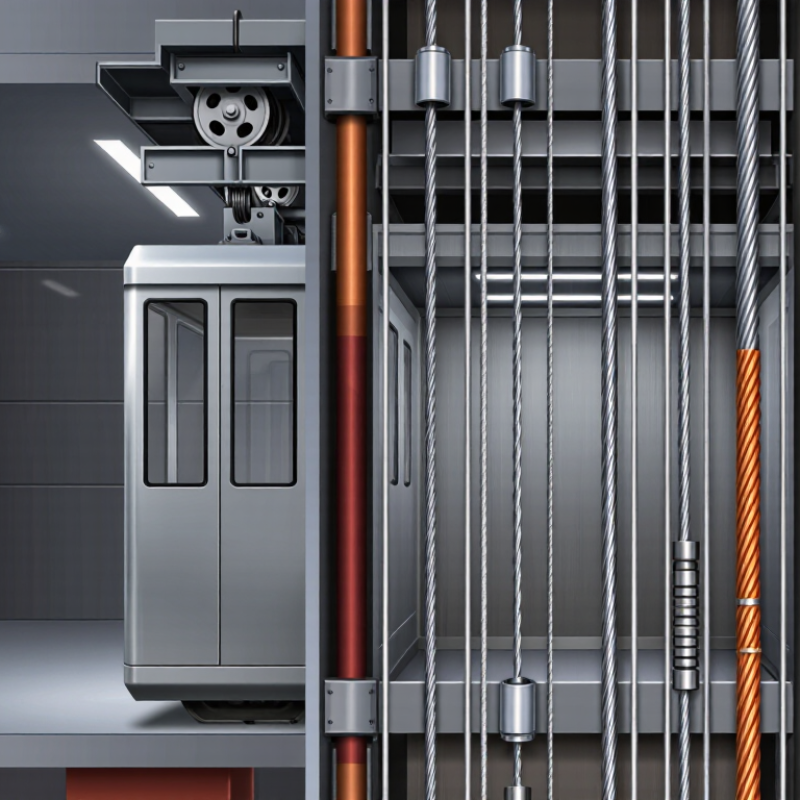
What Is an Elevator Rope and What Types Are Available?

What an Elevator Rope Is and How It Works

An elevator rope is a load-bearing steel wire assembly used in many traction elevators. It links the car and counterweight over a grooved drive sheave. When the motor turns the sheave, friction moves the ropes, lifting or lowering the car. The counterweight balances much of the car’s mass, so the motor uses less energy. Several ropes usually share the load, reducing stress on each one. The brake holds the sheave when the elevator stops.

Rope design affects performance. Conventional ropes use steel wires wrapped around a central core, while compacted ropes place the wires more tightly for improved contact and wear resistance. Rotation-resistant ropes help control twisting in certain lifting arrangements. Some systems use coated steel belts instead of traditional ropes. Each option has different requirements for sheave grooves, lubrication, bending, and inspection. The correct choice depends on car weight, travel height, speed, and local safety standards.

A rope may look sound from the floor. That can be misleading. Broken wires, corrosion, diameter loss, or uneven tension may develop inside the shaft. Qualified technicians inspect visible surfaces, measure wear, check rope tension, and examine how the ropes sit in the grooves. Lubrication also needs care; too little increases friction, but too much can attract dust and reduce traction. No rope is immortal. Installation quality matters, and maintenance records should guide replacement decisions rather than appearance alone.

Key Components and Construction of an Elevator Rope

An elevator rope is a layered steel component, not a simple cable. Individual wires twist into strands, and strands wrap around a core. The core supports shape and flexibility during repeated bending. Common constructions include 6×19 and 8×19 ropes, while compacted strands provide greater strength in limited spaces. Fiber cores can improve flexibility, but steel cores resist crushing better near sheaves. The choice depends on load, speed, sheave diameter, and operating cycles.

ISO 4344:2022 sets requirements for suspension and governor ropes used in lifts. EN 81-20 also specifies a minimum safety factor of 12 for suspension ropes in traction systems. These figures matter, but they do not replace field judgment. A rope may look clean while showing internal wire fatigue. That detail is easy to miss. Wear often appears near end terminations, equalizer points, or heavily used sheave grooves. Lubrication must also match the rope design; excessive lubricant can hide broken wires and collect abrasive dust.

Tips: Check rope diameter at several points, not just one location. Compare visible wear with manufacturer and code limits. Record corrosion, kinks, birdcaging, and uneven tension during every inspection. A practical inspection log helps reveal slow changes. Still, records can be incomplete, and that weakness deserves attention. Rope replacement should follow the applicable safety code and assessment by a qualified elevator professional. (Sources: ISO 4344:2022; EN 81-20:2020.)

Elevator Rope Constructions: Nominal Wire Count

A wire rope is made from strands twisted around a core. The chart compares the nominal number of wires in the strands for three common construction designations.

Values are calculated from the construction designation: number of strands multiplied by nominal wires per strand. Core wires are excluded; actual rope design and suitability depend on the specified rope construction and elevator application.

Materials and Designs Used in Elevator Ropes

Elevator ropes are carefully assembled components, not simple bundles of wire. In traction elevators, the common design uses high-strength steel wires twisted into strands, then laid around a central core. The core may be fiber or steel. A fiber core can make a rope more flexible, while a steel core generally offers greater resistance to crushing. Either choice affects how the rope bends over sheaves and how it wears.

Strand patterns and rope lay also matter. Compacted strands have flattened outer wires that create a smoother contact surface against the sheave. Other constructions balance flexibility, strength, and resistance to rotation. There is no universally best design; rope specifications must match the elevator’s sheaves, load, speed, and operating conditions. Small differences matter.

Steel remains widely used, but some modern systems use engineered synthetic-fiber ropes, such as aramid-based designs. Their lower mass can be useful in tall buildings, though they require system-specific handling and inspection practices. A rope’s material alone does not tell the whole story. Diameter, lubrication, wire condition, and bending cycles all influence service life. It is easy to oversimplify this choice: the most durable-looking rope is not automatically the right one. Regular inspection by qualified elevator technicians helps identify wear, corrosion, broken wires, or changes in rope tension.

What Is an Elevator Rope and What Types Are Available? — Materials and Designs Used in Elevator Ropes

Common elevator suspension and control rope designs and their typical characteristics
Rope type or construction Materials and design Typical application Key characteristics Selection considerations
Conventional stranded steel hoist rope Multiple high-strength steel wires are twisted into strands, and the strands are laid around a core. Traction elevators, where ropes suspend the car and counterweight and pass over a drive sheave. Flexible, load-bearing construction designed to bend repeatedly over sheaves while maintaining strength and traction. Rope diameter, construction, rated strength, sheave compatibility, traction, and fatigue performance must match the elevator design.
8 × 19 Seale construction Eight strands, typically with 19 wires per strand, arranged in a Seale pattern with larger outer wires. A commonly used construction for elevator suspension ropes. The relatively larger outer wires can provide good resistance to external wear; flexibility depends on the exact rope specification. The “8 × 19” designation describes the strand and wire arrangement; it does not by itself specify rope strength or suitability.
8 × 19 Warrington construction Eight strands with a Warrington wire arrangement, which uses wires of differing diameters within a layer. Traction elevator suspension applications that call for a flexible stranded rope. The wire arrangement can help combine flexibility with a compact strand structure. Actual performance varies with wire sizes, rope grade, core, and manufacturing details; check the elevator’s approved specifications.
Fiber-core steel rope Steel wire strands laid around a fiber core, which may be made from natural or synthetic fiber. Elevator rope designs where the specified core construction is suitable for the load and operating conditions. The core supports the strands and can retain lubricant; it is generally more compressible than a steel core. Core material, lubrication, environmental conditions, and resistance to crushing must be considered.
Independent wire rope core (IWRC) A steel wire rope core supports the outer strands, rather than a fiber core. Applications in which the elevator rope specification calls for a steel core and its associated mechanical properties. Provides a steel supporting core and can offer greater resistance to core deformation under compression than a fiber core. Confirm compatibility with the sheave, rope bending requirements, and the elevator manufacturer’s approved rope specification.
Governor rope A steel wire rope selected for the elevator’s overspeed governor system. Connects to the governor mechanism and helps actuate the safety system when specified overspeed conditions occur. Designed for reliable interaction with the governor and associated safety equipment; it is not interchangeable with a hoist rope by default. Use the required construction, diameter, tension, and inspection criteria for the particular governor system.
Coated steel suspension belt A flat suspension element containing steel cords embedded in a polymer coating. Used in some elevator systems as an alternative suspension medium; it is a belt, not a conventional round wire rope. Flat geometry and a protective coating distinguish it from stranded steel ropes; inspection methods are system-specific. Must be used only with equipment designed and approved for that belt system, including its sheaves and monitoring requirements.

Note: Rope selection and replacement should follow the elevator’s approved design, applicable safety requirements, and the instructions of qualified elevator professionals. Construction names alone are not enough to determine compatibility.

Common Types of Elevator Ropes and Their Applications

Elevator ropes carry the car and connect it to the counterweight in many traction elevators. Their construction affects flexibility, wear, and how they suit different operating conditions. The right choice depends on the elevator design, load, travel height, and maintenance requirements. No single rope type fits every installation.

Conventional steel wire ropes are widely used in traction systems. Their twisted strands bend around sheaves while supporting repeated movement. They suit many passenger and freight elevators, though wear and lubrication need regular attention. Some newer systems use coated steel belts instead. These combine steel cords with a protective outer layer and can work with compact sheaves. They are not technically round ropes, but serve a similar suspension role. Compensating ropes help balance changing rope weight in taller buildings. Governor ropes, by contrast, operate the overspeed safety mechanism rather than suspending the car. Details vary by elevator design.

Tips: Match replacement components to the elevator manufacturer’s specifications and a qualified technician’s assessment. Look for broken wires, corrosion, unusual noise, or uneven movement. Small signs matter. Inspection intervals and acceptance criteria depend on the equipment, so avoid judging rope condition by appearance alone.

How Elevator Ropes Are Selected and Maintained

Elevator rope selection starts with the duty, not the catalogue. Rated load, travel speed, traction, sheave diameter, and operating environment all affect rope construction and size. ASME A17.6 covers elevator suspension and governor systems, including rope requirements; engineers should verify compatibility with the lift design rather than swap ropes by appearance. Steel wire ropes are common, while some systems use engineered alternatives. The right choice depends on the installation.

Usage matters. National Elevator Industry, Inc. reports that elevators in the United States make about 18 billion passenger trips annually. That figure is a reminder that small, repeated loads accumulate. During maintenance, a qualified technician checks for broken wires, corrosion, flattening, diameter loss, and uneven rope tension. They also assess lubrication and the sheave groove. Small changes matter. A rope can look acceptable from the machine room doorway, yet show wear at a sheave contact point.

Inspection intervals and removal criteria should follow the applicable code, equipment instructions, and documented site conditions. Records help reveal gradual changes between visits, especially after heavy use or unusual events. Measurements should be consistent; otherwise, comparisons can mislead. I would not rely on appearance alone. It is an easy shortcut, and sometimes the wrong one.

FAQS

What do elevator suspension ropes do?

In many traction elevators, they support the car and connect it to a counterweight. They move over sheaves during operation.

What is the difference between steel wire ropes and coated steel belts?

Steel wire ropes use twisted strands that bend around sheaves. Coated belts combine steel cords with a protective outer layer and may suit compact sheaves.

What does a compensating rope do?

It helps balance changing rope weight in taller buildings. Its role depends on the elevator design.

Does a governor rope suspend the elevator car?

No. It operates the overspeed safety mechanism rather than carrying the car.

What factors guide rope selection?

Rated load, travel speed, traction, sheave diameter, and operating conditions all matter. The elevator’s design and maintenance needs matter too.

What should a technician inspect?

They check for broken wires, corrosion, flattening, diameter loss, and uneven tension. They also assess lubrication and sheave grooves. Small signs matter.

Can a rope be judged by appearance alone?

No. Wear may be clearer where the rope contacts a sheave than from across the machine room. I still find appearance tempting, but it can mislead.

How often should ropes be inspected or replaced?

Follow applicable codes, equipment instructions, and site conditions. Keep consistent inspection records; otherwise, gradual changes can be easy to miss.

Conclusion

An Elevator Rope is a critical part of a lift’s suspension and drive system, connecting the car and counterweight while helping the machine move them smoothly and securely. Its construction typically combines load-bearing wires arranged into strands and formed around a core. The choice of materials, rope diameter, strand pattern, and core design affects flexibility, strength, wear resistance, and suitability for different operating conditions.

Elevator ropes come in several designs for different lift types, travel heights, loads, and speeds. Selecting the right rope involves considering the lift’s specifications, operating environment, and manufacturer requirements. Regular inspection and maintenance are also essential: technicians check for wear, corrosion, deformation, and changes in tension, and replace ropes when they no longer meet safety and performance requirements. Together, careful selection and routine care support reliable, smooth elevator operation.


Sophia

Sophia

Sophia is a dedicated marketing professional with an exceptional depth of knowledge about her company's products and services. With a keen understanding of market trends and customer needs, she crafts insightful blog posts that not only inform but also engage readers, enriching the company’s online......