How to Choose Hoist Steel Wire Rope?

Time:2026-10-28 Author:Madeline
0%

Choosing the right Hoist Steel Wire Rope is a safety decision, not merely a purchasing task. The rope must match the hoist, working load, reeving system, drum, sheaves, and operating environment. A rope that looks strong may still fail prematurely when it bends over small sheaves or carries repeated shock loads.

This guide explains the practical factors experienced lifting professionals examine before selection. We will consider rope construction, diameter, tensile strength, lay, core type, and resistance to crushing or rotation. We will also discuss moisture, dust, heat, chemicals, and outdoor exposure. These conditions leave visible clues, such as flattened strands, broken wires, dry lubricant, or rust near end fittings. Small details matter.

Manufacturer specifications and the hoist’s rated capacity should guide every decision. Qualified personnel should confirm compatibility before installation or replacement. Inspection records, maintenance instructions, and applicable industry standards provide stronger evidence than guesswork. A convenient rule can fail.

There is no universal “best” Hoist Steel Wire Rope. A compact warehouse hoist may need different performance from a tower crane or marine lifting system. Even two similar hoists can create different wear patterns because of speed, duty cycle, alignment, or operator technique. This guide offers a reliable framework, but real equipment conditions deserve careful review. One overlooked sheave groove may change the result. When uncertainty remains, consult the rope manufacturer, hoist supplier, or a competent lifting specialist before the rope enters service.
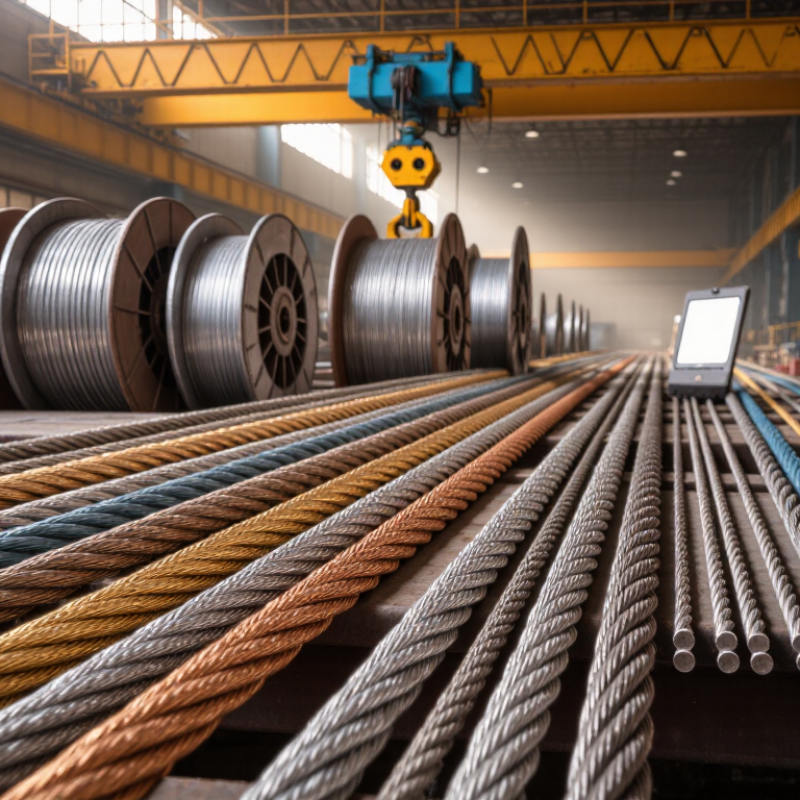
How to Choose Hoist Steel Wire Rope?

Define Load, Lift Height, and a Minimum 5:1 Safety Factor

How to Choose Hoist Steel Wire Rope?

Define the load before selecting a hoist steel wire rope. Include the load’s actual weight, lifting accessories, and any material added during handling. Do not rely on an estimated weight. A small error can become dangerous when the load accelerates or swings. Lift height also matters. Measure the full travel distance, then add rope needed for reeving, drum wraps, and safe anchoring. A rope that is too short creates poor drum engagement and unnecessary stress.

Use a minimum 5:1 safety factor. Divide the rope’s minimum breaking force by the intended working load. The result should be at least five. For example, a 5,000-kilogram breaking force supports no more than a 1,000-kilogram working load under this basic ratio. This calculation is only a starting point. Sheaves, bends, shock loading, temperature, corrosion, and lifting angles can reduce practical capacity. Check the rope’s certified specifications and your site’s lifting requirements.

Inspect the rope before every lift. Look for broken wires, crushed sections, birdcaging, severe wear, rust, or flattened strands. Replace questionable rope. Do not guess. A trained lifting professional should confirm the selection, especially for repeated or critical lifts. Real work is rarely neat. Load estimates change, and operators can overlook small details. Recheck the figures when the load, lift height, or rigging arrangement changes. Conservative choices usually cost less than an interrupted lift or damaged equipment.

Match Rope Construction to Duty: 6×19, 6×36, or Rotation-Resistant

Choosing hoist steel wire rope starts with the lifting duty, not the rope diameter alone. In field inspections, 6×19 rope often suits applications with heavy abrasion and moderate bending. Its larger outer wires resist rubbing against sheaves and drums. However, it feels less flexible during repeated cycles. A tight bend can accelerate fatigue.

6×36 construction uses more, smaller wires in each strand. This gives better flexibility and bending-fatigue resistance. It works well where the rope passes frequently over sheaves. The trade-off is lower abrasion resistance. Dirt, poor lubrication, and damaged grooves can shorten its service life quickly. Check the required diameter-to-sheave ratio, drum arrangement, working load, and lifting frequency against technical data.

Rotation-resistant rope is a different choice. Its layered construction reduces torque and spinning under load. It may be necessary for single-fall lifts, tall lifts, or loads that must remain stable. Yet it demands careful installation, correct end termination, and controlled handling. Unwinding it carelessly can create permanent damage. I have seen ropes selected correctly but ruined by small fleet angles and mismatched grooves. That detail is easy to overlook. Inspection should include broken wires, diameter loss, corrosion, birdcaging, and changes in lay. When the duty is uncertain, a qualified lifting engineer should review the rope design and applicable safety requirements before operation.

Select Tensile Grade: 1770, 1960, or 2160 MPa

How to Choose Hoist Steel Wire Rope?
Select Tensile Grade: 1770, 1960, or 2160 MPa

Tensile grade describes the wire’s nominal breaking strength. A 1770 MPa rope is often suitable for moderate lifting duty and simpler operating conditions. A 1960 MPa grade provides more strength without a dramatic increase in rope diameter. A 2160 MPa rope offers the highest nominal strength among these choices. However, higher strength does not automatically mean longer service life.

In practical hoist selection, I examine the working load, rope diameter, safety factor, reeving arrangement, drum condition, and sheave diameter. A 2160 MPa rope can help when space limits the available diameter. Yet, it may experience demanding bending, crushing, or fatigue if the equipment is poorly matched. The rope’s construction and core also matter. Never select tensile grade alone.

Check the lifting equipment manual and applicable standards before ordering. Request a certificate showing grade, construction, diameter tolerance, and breaking force. During inspection, I look for broken wires, flattened strands, corrosion, and uneven winding. Small defects matter. I once focused too heavily on breaking strength and underestimated repeated bending near a sheave. That decision needed reconsideration. For frequent lifting cycles, a 1770 or 1960 MPa rope with better fatigue performance may be more dependable than a stronger alternative. Record operating hours and inspection findings, then adjust the choice using real site evidence.

How to Choose Hoist Steel Wire Rope? - Select Tensile Grade: 1770, 1960, or 2160 MPa

Selection Dimension 1770 MPa 1960 MPa 2160 MPa
Nominal tensile grade 1,770 N/mm² 1,960 N/mm² 2,160 N/mm²
Relative theoretical strength* 100% Approximately 111% Approximately 122%
Main advantage Balanced performance, ductility, and cost Higher breaking force without a major change in rope diameter Highest strength-to-diameter potential
Typical selection situations General-purpose hoisting, moderate lifting duty, and applications where handling flexibility is important Frequent industrial lifting, heavier working loads, or installations requiring additional breaking-force margin High-capacity lifting where equipment design, sheaves, drums, and rope compatibility are verified
Recommended priority Choose when a balanced service life and economical specification are the priority Choose when higher capacity is needed while retaining the same nominal rope diameter Choose only when the complete hoist system is designed and approved for the higher-grade rope
Important compatibility checks Rope construction, core type, lay direction, drum groove, sheave diameter, lubrication, and termination Rope construction, core type, lay direction, drum groove, sheave diameter, lubrication, and termination Rope construction, core type, lay direction, drum groove, sheave diameter, lubrication, and termination
Do not decide by grade alone Working load limit must be based on certified minimum breaking force and the applicable design factor Working load limit must be based on certified minimum breaking force and the applicable design factor Working load limit must be based on certified minimum breaking force and the applicable design factor
Selection rule: Select the lowest tensile grade that satisfies the required minimum breaking force, working load limit, fatigue performance, bending requirements, and the hoist manufacturer's specifications.

*Relative theoretical strength assumes the same rope diameter and construction, with capacity estimated in proportion to tensile grade. Actual minimum breaking force depends on rope construction, metallic cross-sectional area, manufacturing tolerance, core, and applicable standard. Always use the certified breaking-force value for the specific rope.

Verify Sheave-to-Rope Diameter Ratios and Drum Compatibility

How to Choose Hoist Steel Wire Rope?

Sheave-to-rope diameter ratio is a practical starting point for hoist rope selection. Calculate D/d by dividing sheave pitch diameter by rope diameter. A 400 mm sheave with a 20 mm rope gives D/d 20. That looks reasonable, but the number alone is not enough. ISO 4308-1:2010 evaluates mechanism class, rope construction, loading, and bending cycles. Its tables do not support one universal ratio for every hoist. The Wire Rope Users Manual, published by the Wire Rope Technical Board, also links smaller D/d ratios with faster bending fatigue. I have seen ropes fail early because the sheave matched the diameter, but not the duty cycle.

Drum compatibility needs equal attention. Check groove pitch, groove radius, winding direction, drum width, and fleet angle. The rope should sit smoothly in the groove, without riding on its edges. Multi-layer drums need a rope construction that resists crushing and uneven spooling. ASME B30.30 guidance stresses correct installation, inspection, and operating conditions, rather than diameter selection alone. Do not assume a standard groove will fit every rope. That shortcut is tempting. It can be expensive.

Tips: Measure the actual sheave pitch diameter, not its outside diameter. Confirm the rope manufacturer’s recommended groove dimensions against ISO 4308-1 and ASME B30.30. Inspect the first drum layer under light tension. If winding looks irregular, stop and reassess the rope, drum, and fleet angle.

How to Choose Hoist Steel Wire Rope? Verify Sheave-to-Rope Diameter Ratios and Drum Compatibility

The chart shows typical preliminary minimum sheave-to-rope diameter ratios (D/d) used for common hoist wire-rope constructions. A higher ratio generally reduces bending fatigue. Before selection, confirm the rope manufacturer's requirements, applicable lifting standards, drum groove profile, groove pitch, fleet angle, and the available drum diameter. For compatible drum grooves, the groove pitch is commonly designed slightly larger than the nominal rope diameter, typically around 1.05–1.10d.

Confirm Lubrication, Inspection, and Discard Limits Under ISO 4309

How to Choose Hoist Steel Wire Rope?

Confirm Lubrication, Inspection, and Discard Limits Under ISO 4309

Choosing hoist steel wire rope starts with its working environment. Check rope construction, diameter, strength grade, and compatibility with the drum and sheaves. A strong rope can still fail early when bending cycles, heat, dust, or moisture are underestimated. Ask how often the hoist operates. Observe the actual lift, not only the specification sheet.

Lubrication needs a practical plan. Use a lubricant suitable for the rope and operating temperature. Apply it to a clean surface, allowing penetration between strands. Do not cover rust, crushed sections, or broken wires with fresh grease. That hides evidence. Inspect before lubrication, then inspect again after cleaning when practical. Record the date, rope position, visible defects, and lubricant used. Missed records are common. They are also difficult to defend.

ISO 4309 provides a structured approach to examination, maintenance, and discard decisions. A competent inspector should check broken wires, diameter reduction, corrosion, distortion, birdcaging, heat damage, and termination condition. Discard limits depend on rope construction, lay length, defect location, and service severity. Never rely on one universal broken-wire number. Compare findings with applicable ISO criteria and technical data. Use calibrated diameter measurements at repeated points. A second opinion is sometimes wiser than confidence.

FAQS

What should be included when defining the lifting load?

Include the actual load weight, lifting accessories, and any material added during handling. Do not depend on estimates. A small error can become dangerous when the load swings or accelerates.

How should the required rope length be measured?

Measure the complete lifting travel distance. Add rope for reeving, drum wraps, and secure anchoring. Too little rope can reduce drum engagement and increase stress.

What does a minimum 5:1 safety factor mean?

Divide the rope’s minimum breaking force by its intended working load. The result should be at least five. For example, 5,000 kilograms of breaking force supports up to 1,000 kilograms under this basic ratio.

Does a 5:1 ratio guarantee safe lifting?

No. Sheaves, bends, shock loading, temperature, corrosion, and lifting angles can reduce practical capacity. Treat the ratio as a starting point. Check certified specifications and site requirements.

What rope defects require immediate attention?

Inspect before every lift. Look for broken wires, crushed sections, birdcaging, severe wear, rust, and flattened strands. Replace questionable rope. Do not guess.

How do tensile grades differ?

A 1770 MPa rope suits moderate duty and simpler conditions. A 1960 MPa rope offers more strength without greatly increasing diameter. A 2160 MPa rope provides the highest nominal strength among these grades.

Is the highest tensile grade always the best choice?

No. Higher strength does not automatically provide longer service life. Poorly matched sheaves, drums, or bending conditions can increase fatigue. I once focused too much on breaking strength and underestimated repeated bending.

What information should be checked before ordering a rope?

Review the equipment manual and applicable standards. Request certificates showing grade, construction, diameter tolerance, and breaking force. Also check rope diameter, core, reeving, drum condition, and sheave diameter. Small details matter.

Conclusion

Choosing the right Hoist Steel Wire Rope is essential for safe, reliable, and efficient lifting operations. Begin by defining the maximum working load, lifting height, operating speed, and duty cycle. Apply a minimum 5:1 safety factor, while considering shock loading, bending, and environmental conditions. Rope construction should match the application: 6×19 offers a balance of strength and flexibility, 6×36 provides greater flexibility for frequent bending, and rotation-resistant designs are suitable for single- or multi-part lifting systems where twisting must be controlled.

Next, select an appropriate tensile grade, such as 1770, 1960, or 2160 MPa, based on required strength and equipment limitations. Confirm that sheave and drum diameters are compatible with the rope to reduce fatigue and premature wear. Finally, establish a suitable lubrication and inspection routine, checking for broken wires, corrosion, deformation, and diameter loss. Follow ISO 4309 discard criteria to determine when replacement is necessary and maintain safe lifting performance.


Madeline

Madeline

Madeline is a dedicated marketing professional with a wealth of expertise in our company's core offerings. With a keen understanding of the industry, she brings a unique perspective to her role, consistently delivering high-quality content that highlights the superior aspects of our products. As......