Choosing a Heavy Duty Crane Rope is not simply a matter of picking the thickest cable or the highest breaking load. The right rope must match the crane, the lift, and the conditions around the job. That sounds obvious, yet rushed replacements can miss small details. A rope that fits the drum may still perform poorly on tight sheaves. Construction, core type, diameter, lay, lubrication, and grade all influence flexibility, wear, and service life. Small details matter.
This guide explains how to compare rope features with the crane manufacturer’s requirements, the duty cycle, and the load path. It considers working load and design factors, along with common sources of damage: repeated bending, shock loading, abrasion, corrosion, heat, and poor fleet angle. A rope may look sound while internal wires are deteriorating, so visual checks alone are not enough. Follow documented inspection methods and seek competent assessment when damage is uncertain. Check product traceability, test documentation, and compatibility before installation. A catalogue rating does not permit exceeding the crane’s limits. There is no perfect rope for every site. A more flexible construction may suit frequent bending, while a different option may better resist abrasion. Trade-offs deserve a careful look. The final choice should be based on verified specifications, operating conditions, and advice from qualified equipment professionals—not guesswork.
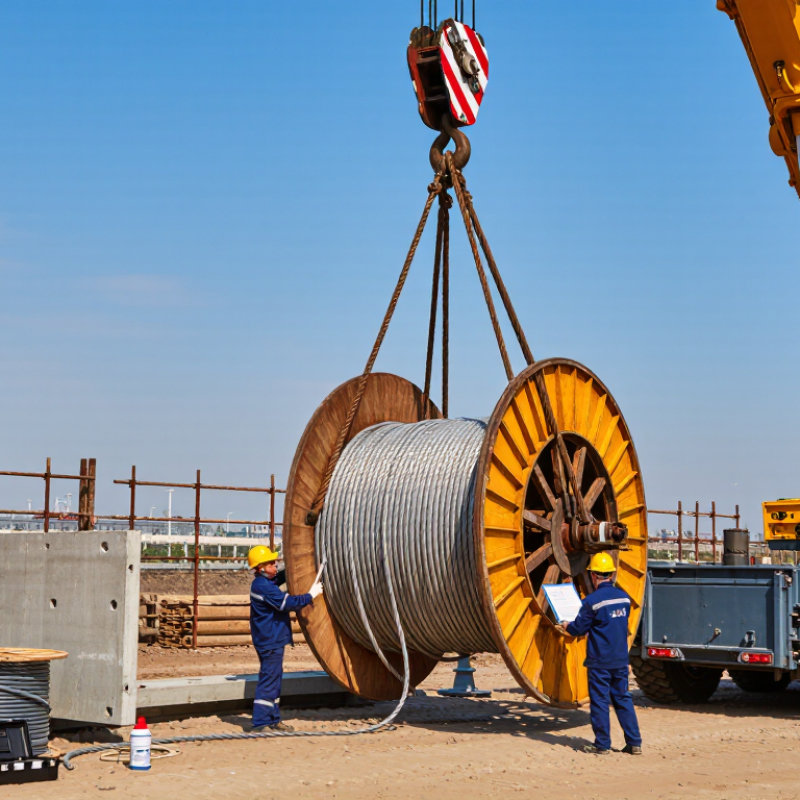
A heavy-duty crane rope is the moving link between the hoist and the load. It carries tension while passing over sheaves and winding onto a drum. Its construction affects how it bends, handles side contact, and resists wear. Repeated bending can fatigue wires, even when the rope looks sound from the ground. A flattened section, broken wires, or a birdcage-shaped distortion deserves prompt attention. That matters.
The rope must suit the crane’s reeving arrangement, drum size, load cycle, and working environment. Start with the equipment manual and the rope’s rated specifications, not diameter alone. Then match rope construction and core type to the required flexibility and resistance to crushing. A rope that bends easily may not be the best choice where abrasion is severe. Oil, grit, moisture, and sharp sheave grooves also change wear patterns. Small details count. Inspect accessible sections regularly, especially near end connections and points that repeatedly cross the same sheaves. Inspection does not reveal every internal flaw, so a qualified person should assess uncertain damage. I would be cautious about treating a single service-life estimate as reliable; actual wear depends on how the crane is used, and operators do not always see the same conditions.
Choose a crane rope from the real lift plan, not the headline capacity alone. Record the heaviest load, hook block weight, number of supporting rope parts, and expected lift speed. Each rope part carries only a share of the load, but acceleration, sudden stopping, and side pull can raise tension. Small differences matter. For U.S. construction cranes, OSHA’s 29 CFR 1926.1414 sets rated-load-based strength requirements for hoist ropes, including a general 3.5 design factor with exceptions for some rope configurations. Confirm the applicable rule and crane setup before comparing catalog breaking strengths. Never treat breaking strength as a working-load rating.
Then check the place and pattern of use. A rope working outdoors near salt spray may need different corrosion protection from one used in a dry warehouse. Fine dust, heat, repeated short lifts, and tight sheaves can also shorten service life. Match rope construction and diameter to the crane maker’s specifications, drum grooves, and sheaves; a rope that fits the load may still bend too sharply. ISO 4309:2017 identifies visible wire breaks, diameter reduction, corrosion, and deformation as inspection and discard considerations. Field conditions change. Keep lift records and inspect the rope under its actual operating conditions. I’d still question any selection based only on a spreadsheet; the groove wear and rope behavior on site can tell a different story.
Choosing a heavy-duty crane rope starts with its working environment. Bright steel wire rope offers high strength and is common indoors or in controlled conditions. Galvanized rope adds corrosion protection for damp or exposed sites. Stainless steel may suit corrosive environments, but its capacity and compatibility must be checked against the crane’s specifications. Salt spray changes the decision.
Construction affects how a rope behaves under load. A 6×19 pattern uses fewer, larger wires and generally resists abrasion well. A 6×36 pattern uses more, finer wires, making it more flexible around smaller sheaves. That flexibility can come with less resistance to wear. A steel core helps resist crushing and heat; a fiber core bends more easily but may not suit hot or high-pressure applications. A useful trade-off.
Ropes designed to resist rotation can help control loads that might otherwise spin, especially on long lifts. They also require careful matching to the crane’s reeving system and operating instructions. Check the rope diameter, sheave size, load range, and inspection criteria before choosing. The “strongest” option is not always the best fit. Real-world wear can differ from a catalog’s ideal conditions.
| Option | Typical characteristics | Best suited to | Trade-offs and checks |
|---|---|---|---|
| High-strength carbon steel wire rope | Common choice for crane hoists; available in a wide range of rope grades, diameters, and constructions. | General heavy-duty lifting when the rope matches the crane design and operating conditions. | Can corrode if its protective coating and lubrication are not maintained. Confirm the required rope grade, diameter, and minimum breaking force against the crane documentation. |
| Galvanized steel wire rope | Zinc coating provides added protection against corrosion compared with an otherwise similar uncoated rope. | Outdoor, damp, or exposed environments where corrosion protection is important. | Galvanizing does not eliminate inspection or lubrication needs. Verify that the rope construction and coating are approved for the crane and application. |
| Stainless steel wire rope | Offers greater corrosion resistance in suitable environments; strength and fatigue performance depend on alloy and construction. | Corrosive or hygienic environments where stainless material is specifically required. | It is not automatically a stronger or better substitute for crane-grade carbon steel rope. Check its rated performance and compatibility with the hoist system. |
| 6 × 19 rope class | Six strands with a relatively low number of wires per strand; generally has larger outer wires than more flexible classes. | Applications where resistance to external wear is a priority and bending demands are compatible with the rope design. | Typically less flexible than a 6 × 36 class rope of comparable size. Actual flexibility and wear behavior vary with the exact construction and core. |
| 6 × 36 rope class | Six strands with more wires per strand than a 6 × 19 class rope; generally offers greater flexibility. | Hoists or reeving arrangements involving frequent bending over sheaves, when specified by the crane designer. | More wires can mean greater sensitivity to abrasion and handling damage. Check sheave and drum compatibility and inspect for broken wires as required. |
| Rotation-resistant construction | Multiple strand layers are arranged to reduce the tendency of a loaded rope to rotate or induce load spin. | Applications where load rotation must be controlled, subject to the crane manufacturer’s specification. | Construction and inspection requirements differ from ordinary single-layer ropes. Do not substitute rope types without confirming compatibility with the crane and reeving system. |
| Independent wire rope core (IWRC) | A separate steel wire rope core supports the outer strands and generally provides a robust, steel-based core. | Many heavy-duty crane applications where a steel core is specified for the rope and operating conditions. | Core choice affects rope behavior and must match the crane specification. Do not assume IWRC is suitable for every drum, sheave, or operating condition. |
| Fiber-core steel wire rope | A fiber core can provide flexibility and help retain lubricant, depending on the rope design. | Applications where the crane documentation allows a fiber core and its characteristics suit the duty. | Generally less resistant to heat and crushing than a steel core. Check temperature, drum-layering, and load conditions before selection. |
| Synthetic fiber rope, such as HMPE | Much lighter than steel wire rope and may be easier to handle; performance depends on fiber, coating, and rope construction. | Only cranes and lifting systems specifically designed and approved for synthetic rope. | Heat, abrasion, UV exposure, chemicals, and sheave or drum design can affect service life. It is not a direct replacement for steel wire rope without system approval. |
Selection reminder: Use the crane manufacturer’s specified rope type, diameter, grade, construction, and core. Check the applicable lifting-equipment requirements, reeving and sheave compatibility, environment, duty cycle, and inspection criteria. Never select a crane rope by material or construction alone.
A heavy-duty crane rope must match the crane, not just the load on the hook. Check the manual for rope diameter, construction, minimum breaking force, and approved end fittings. Also confirm the drum groove, sheave size, reeving pattern, and available rope length. A rope that is too large may ride poorly in the grooves. One that is too small can suffer crushing or accelerated wear. Close enough is not enough.
Standards matter. ASME B30.5 covers mobile-crane operation and inspection, while ISO 4309 gives guidance on wire-rope care, inspection, and discard criteria. Use the criteria that apply to your crane and workplace; a visual check alone can miss internal damage. BLS reported 1,075 fatal work injuries in the U.S. construction industry in 2023. That figure covers many hazards, not crane ropes specifically, but it shows why equipment checks deserve care. Inspect for broken wires, corrosion, flattened sections, and kinks. Keep records. They may reveal a wear pattern that a rushed inspection misses. If the rope’s identity or history is unclear, pause and verify compatibility with a qualified inspector. I’d rather recheck a measurement than assume.
How to Choose the Right Heavy Duty Crane Rope?
Evaluate Inspection Needs and Service Life
Choose a crane rope that your crew can inspect reliably, not just one with a high breaking strength. Service life depends on load cycles, reeving, drum condition, lubrication, and exposure to grit or moisture. ISO 4309:2017 provides inspection and discard guidance for steel wire ropes used on cranes. Its approach makes rope construction and visible damage central to service decisions. Small clues matter.
Inspection schedules affect operating costs. In the United States, OSHA standard 1910.179 calls for frequent inspections at intervals ranging from daily to monthly, and periodic inspections no more than 12 months apart. The exact schedule depends on use and conditions. This makes access to the rope important: guards, sheaves, and drum areas should allow close checks. Track broken wires, diameter changes, corrosion, and deformation over time.
Tips: Record each inspection with the rope location, date, and findings. Photograph the same section when possible. Keep records. Compare changes against the rope maker’s guidance and applicable standards; do not rely on a single visual check. A rope may look serviceable while hidden wear accumulates, and inspection notes can be imperfect. Revisit them.
Evaluate inspection needs alongside operating conditions: duty cycle, load, abrasion, corrosion, and heat all affect rope wear and service life.
How to read this chart: OSHA 29 CFR 1910.179 specifies frequent inspections at intervals ranging from daily to monthly, and periodic inspections at intervals ranging from 1 to 12 months, depending on service, environment, and other conditions. These are inspection intervals—not a guaranteed rope service life. Follow the crane and rope manufacturers’ instructions, inspect more often in severe service, and remove rope from service when applicable discard criteria are met.
Source: OSHA 29 CFR 1910.179(j).
It connects the hoist to the load, carrying tension over sheaves and onto a drum. Repeated bending can fatigue its wires.
Check the crane manual, rated specifications, reeving arrangement, drum size, and working conditions. Diameter alone is not enough.
A 6×36 construction has finer wires and often bends more easily around smaller sheaves. It may wear faster under abrasion.
Its larger wires generally offer better abrasion resistance. Consider it where surface wear matters, but verify compatibility first.
Bright steel suits controlled conditions, while galvanized rope offers added corrosion protection in damp settings. Stainless steel needs capacity and compatibility checks.
Rotation-resistant ropes may help manage spinning loads on long lifts. Match them carefully to the crane’s reeving and instructions.
Look for broken wires, corrosion, flattened sections, kinks, or birdcage-shaped distortion. Small details count. Ask a qualified person about uncertain damage.
Records can reveal wear near end connections or repeatedly used sheaves. Visual checks may miss internal flaws. I still recheck measurements.
Verify rope diameter, construction, breaking-force rating, end fittings, sheave size, drum grooves, and available length. Close enough is not enough.
Choosing the right Heavy Duty Crane Rope begins with understanding its role in lifting and supporting loads safely under demanding conditions. Consider the weight, shape, and movement of the loads, as well as the crane’s operating environment, including exposure to moisture, abrasion, heat, or frequent use. These factors help determine the rope’s required strength and durability.
Next, compare rope materials and construction types, since their flexibility, wear resistance, and handling characteristics can vary. Confirm that the rope suits the crane’s specifications and meets applicable safety requirements. Finally, consider how easily it can be inspected and maintained, and how its expected service life fits the demands of the job. Regular checks for wear, damage, or deformation can help identify when replacement is needed and support reliable operation over time.
Mei Shen STEEL