7 Best Lifting Ropes for Cranes in 2026

Time:2026-11-25 Author:Oliver
0%

Selecting a Lifting Rope For Cranes is not a simple brand comparison. The right choice depends on the crane, load, lifting pattern, and working environment. A rope that performs well in a dry warehouse may be less suitable near salt air, abrasive dust, or frequent bending. Small details matter.

This guide compares seven options for 2026, focusing on practical features such as rope construction, diameter, flexibility, wear resistance, and compatibility with sheaves and drums. It also considers clear product specifications and the support available from manufacturers. These points can help narrow the field, but they cannot replace checking the crane’s rated capacity and the rope maker’s instructions. Fit matters.

A polished specification sheet does not tell the whole story. Actual service life also depends on installation, operating habits, and regular inspection by qualified personnel. Even a high-quality rope can wear sooner than expected when it is poorly matched to the equipment. That is worth remembering. The selections ahead are intended as a starting point, not a universal ranking for every lift. Compare each candidate against your crane configuration, expected loads, and site conditions before making a purchase.
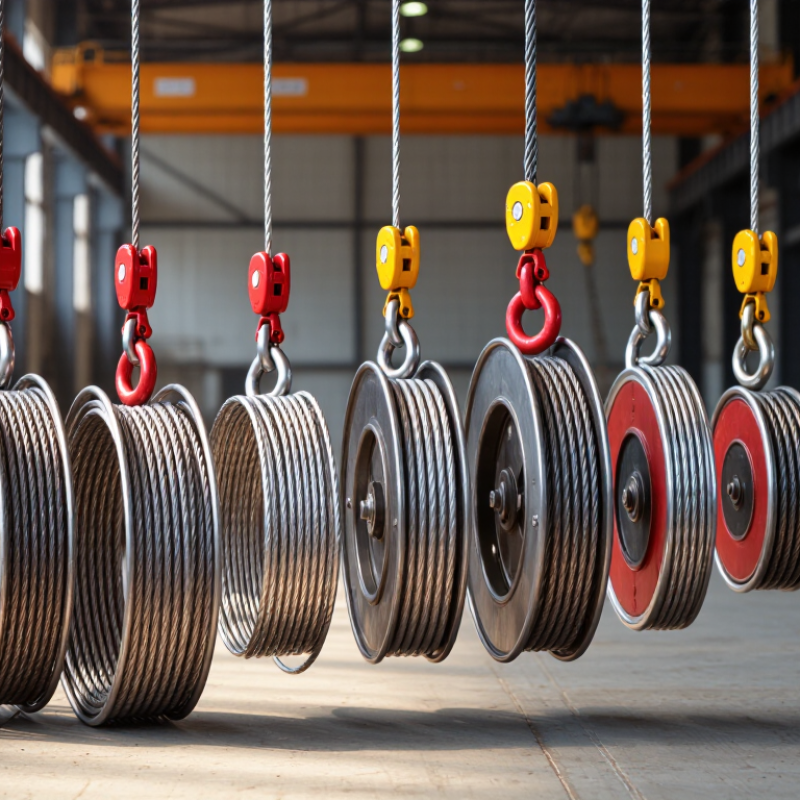
7 Best Lifting Ropes for Cranes in 2026

Understanding Crane Lifting Ropes and Their Main Types

Understanding Crane Lifting Ropes and Their Main Types

A crane’s lifting system may use a hoist rope or a separate sling, and the distinction matters. Wire rope is common for crane hoists because its steel strands handle repeated movement and heavy loads. Inspect for broken wires, crushing, corrosion, and kinks; damage can be difficult to judge by sight alone. It is easy to overlook small defects.

Synthetic slings, made from webbing or round fibers, are lighter and can cushion finished surfaces. They suit many load shapes, but sharp edges can cut them, so suitable edge protection is essential. Chain slings tolerate rougher contact and heat better than many synthetic options, though they are heavier and still require inspection. These types are not interchangeable. Choose according to the crane setup, load shape, environment, and rated capacity—not appearance.

Tips: Check the sling or rope identification tag and confirm its rated capacity for the actual hitch and angle. Look over the full length before each lift, especially near hooks and contact points. If markings are missing or damage is uncertain, set it aside and ask a qualified person. A quick glance is not a full inspection.

How to Choose a Crane Lifting Rope for Your Application

Choosing a crane lifting rope starts with the crane, not the price tag. Check the equipment manual for the required rope diameter, construction, and compatible end termination. The rope must match the drum and sheaves; a poor fit can increase wear and reduce service life. Small details matter.

Consider the load, lift frequency, and working environment. Repeated lifts may call for a rope suited to fatigue resistance, while outdoor or coastal use can expose it to moisture and corrosion. Wire rope construction affects flexibility, strength, and resistance to crushing. There is no single best option. A rope that performs well on a short, occasional lift may wear quickly in continuous service.

Compare the rated working load with the crane’s requirements, and never treat breaking strength as a usable lifting limit. Confirm the complete rigging arrangement, including reeving and terminations, with the crane documentation or a qualified lifting professional. Inspect for broken wires, kinks, corrosion, and deformation before use, following the equipment maker’s criteria. I would not choose by diameter alone; that shortcut is tempting, but it can miss a mismatch in construction or duty. Keep inspection records, too. They help reveal wear patterns that a quick glance can miss.

7 Best Lifting Ropes for Cranes in 2026: How to Choose a Crane Lifting Rope

OSHA minimum design factors for selected sling types used in lifting operations

A design factor is the ratio between a sling’s rated strength and its rated load; it is not the working load limit. These OSHA values apply to the listed sling types, not to the selection of crane hoist wire rope. Choose equipment according to the load, lift configuration, environment, and applicable requirements.

Source: OSHA 29 CFR 1910.184

Seven Top Lifting Ropes for Cranes in 2026

Seven Top Lifting Ropes for Cranes in 2026 include six-strand 6×19 ropes for general duty, 6×36 ropes for added flexibility, rotation-resistant ropes for multi-part reeving, compacted-strand ropes for abrasion resistance, lang-lay ropes for wear tolerance, galvanized ropes for outdoor corrosion protection, and plastic-impregnated ropes for reduced internal wear. Stainless steel can suit corrosive environments, but its capacity and suitability need engineering review. These are construction or material options, not interchangeable upgrades. Small details matter.

The U.S. Bureau of Labor Statistics reported 5,283 fatal work injuries in 2023 across all industries; the figure is not crane-specific, but it underlines why lifting controls matter. ASME B30.30 covers wire-rope selection, use, and inspection for lifting applications. Match rope construction to load, reeving, drum and sheave diameter, and operating environment. A rope can look sound outside while suffering internal damage. That part is easy to miss.

Tips: Check the rope certificate and manufacturer’s inspection criteria before installation. Inspect for broken wires, corrosion, crushing, and deformation; remove rope when rejection criteria are met. Record findings. And question any selection based on breaking strength alone: working load depends on the complete lifting system.

Comparing Rope Strength, Materials, Compatibility, and Service Life

7 Best Lifting Ropes for Cranes in 2026

Comparing Rope Strength, Materials, Compatibility, and Service Life

Choosing a crane rope means matching strength to the actual lift, not just comparing headline breaking-load figures. Steel wire rope offers durability and resistance to abrasion, while synthetic rope is lighter and easier to handle. The right choice depends on load, environment, sheave diameter, drum grooves, and end fittings. The Wire Rope Technical Board’s Wire Rope Users Manual explains how rope construction and handling affect performance. A mismatch can cause uneven wear, even when the rope appears strong enough. Small details matter. A perfectly tidy comparison is difficult, since duty cycles vary.

Service life depends on bending, shock loading, corrosion, storage, and inspection—not simply the calendar. OSHA’s 29 CFR 1910.184 gives a useful sling inspection benchmark: remove a wire-rope sling from service for 10 randomly distributed broken wires in one rope lay, or five broken wires in one strand in one lay. This is a U.S. benchmark, not a universal substitute for applicable guidance or manufacturer limits. A rope can also conceal internal damage. Not always obvious.

Tips: Check the rope’s diameter against the sheave and drum specifications. Look for crushed strands, rust, and broken wires; record inspection findings. If the rope’s history is unclear, pause and have a qualified person assess it.

Safe Use, Inspection, and Maintenance of Crane Lifting Ropes

Crane-rope safety starts with matching the rope to the crane, sheaves, load, and lifting plan. Check the rope’s construction, diameter, and rated capacity against the equipment instructions. A rope that fits the drum may still be unsuitable for the lift. Small flaws matter. Before each shift, look for broken or flattened wires, kinks, corrosion, crushing, birdcaging, heat damage, and loose end fittings. Check the rope where it passes over sheaves, not just the visible length.

Inspection needs more than a quick glance. A qualified person should assess the rope at intervals set by its use and applicable guidance, and record findings. Compare measurements with the rope maker’s discard criteria; limits vary by rope type and damage. Do not guess. If you find serious damage or cannot assess it confidently, stop using the rope and have it evaluated. A tidy surface can hide internal wear, and rushed checks sometimes miss it.

During lifting, reeve the rope correctly and keep it clear of sharp edges. Avoid shock loading, sudden starts, and side pulls that can twist or crush strands. Keep people clear of suspended loads. After use, remove dirt and moisture as recommended, then apply only compatible lubricant. Store the rope dry, ventilated, and away from chemicals, heat, and standing water. Keep inspection and maintenance records; they help reveal recurring wear patterns.

7 Best Lifting Ropes for Cranes in 2026 — Safe Use, Inspection, and Maintenance of Crane Lifting Ropes
Rope construction Typical characteristics Where it may be a good fit Selection considerations Inspection and maintenance priorities
6×19 class, fiber core Six strands around a fiber core; generally more flexible than a comparable independent wire rope core (IWRC) construction. Applications where flexibility and repeated bending are important, if the crane and rope manufacturer permit this construction. Confirm the required rope diameter, grade, core, lay, and minimum breaking force against the crane documentation. A fiber core may be unsuitable for some heat, crush, or operating conditions. Check for broken wires, corrosion, kinks, crushing, core protrusion, and changes in rope diameter. Keep the rope clean and lubricated as specified.
6×19 class, IWRC Six strands around an independent steel wire rope core; the steel core generally offers greater support against crushing than a fiber core. General crane hoisting applications where a steel core is specified and compatible with the drum and sheaves. Do not assume this construction has the same flexibility or performance as a fiber-core rope. Check compatibility with the reeving system and manufacturer requirements. Look for broken wires, corrosion, wear, deformation, and damage around drum crossovers and sheaves. Apply compatible rope lubricant when required.
6×36 class, IWRC Six strands with a higher wire count per strand than the 6×19 class; commonly selected where greater flexibility is needed. Crane systems with frequent bending over sheaves, when the specified diameter and rope construction are approved for the equipment. More wires can make individual wire breaks less conspicuous. Follow the applicable discard criteria and inspection method rather than relying on a casual visual check. Inspect closely for broken wires, abrasion, corrosion, flattening, and localized damage. Pay particular attention to sections repeatedly passing over sheaves.
8×19 class Eight-strand construction; the additional strands can provide a smoother rope surface and may offer flexibility, depending on the exact design. Some crane hoists designed for eight-strand ropes, especially where smooth running over compatible sheaves is desirable. Use only when the crane manufacturer permits the construction. Check groove profile, sheave and drum compatibility, rope diameter, and any rotation requirements. Check for broken wires, strand damage, flattening, abrasion, and uneven wear. Confirm that the rope tracks and winds correctly on the drum.
Rotation-resistant 19×7 Multi-layer construction designed to reduce torque and rotation under load compared with conventional single-layer ropes; it is not non-rotating. Hoisting arrangements where load rotation is a concern and the crane manufacturer specifies a suitable rotation-resistant rope. Requires careful handling, installation, and reeving. Avoid twisting, uncontrolled unloading, or incorrect end connections; these can cause internal damage or loss of rotation resistance. Inspect for birdcaging, core or layer disturbance, kinks, broken wires, and diameter changes. Use the construction-specific discard criteria and trained inspectors.
Rotation-resistant 35×7 Multi-layer, rotation-resistant construction intended to limit load-induced rotation; actual performance depends on design and operating conditions. Applications requiring controlled rotation where this rope type is expressly approved for the hoist and reeving arrangement. Not interchangeable with other rotation-resistant ropes by name alone. Verify compatibility, installation procedure, end termination, and manufacturer guidance. Watch for strand displacement, birdcaging, kinks, corrosion, and abnormal diameter or lay changes. Remove from service when applicable criteria are met.
Compacted-strand wire rope Strands are compacted during manufacture, producing a denser rope surface than a comparable conventional strand design. Some demanding crane duties where the equipment maker approves the rope and its properties suit the sheaves, drum, and duty cycle. Compaction does not make a rope universally stronger or suitable for every crane. Verify certified rope data, minimum breaking force, and system compatibility. Inspect for external wear, broken wires, corrosion, crushing, and damage to the compacted surface. Use the rope maker’s inspection and discard guidance.

Safe-use note: There is no universal working load limit for a rope construction alone. Select and use crane wire rope in accordance with the crane and rope manufacturers’ instructions, applicable regulations, and a qualified person’s assessment. Before each shift, check the rope and reeving for visible damage, correct seating, and abnormal operation; perform and record periodic inspections as required. Keep the rope properly lubricated, avoid shock loading and side pulling, and take it out of service when applicable discard criteria are reached.

FAQS

What should I check before choosing a crane lifting rope?

Check the crane manual for the required diameter, construction, and end termination. The rope must fit the drum and sheaves.

Is rope diameter enough to make a safe choice?

No. Construction and duty matter too. It is easy to think diameter is enough; I would pause there.

How do load frequency and working conditions affect rope choice?

Frequent lifting may require better fatigue resistance. Outdoor or coastal work can expose rope to moisture and corrosion.

Which rope constructions suit different crane applications?

Six-strand ropes can suit general duty, while more flexible constructions may help with frequent bending. Rotation-resistant ropes may suit multi-part reeving.

Can I use breaking strength as the lifting limit?

No. Compare rated working load with the crane’s requirements and consider the complete rigging arrangement.

What should I inspect before using a rope?

Look for broken wires, kinks, corrosion, crushing, and deformation. Follow the equipment maker’s rejection criteria.

Can a rope look fine but still have damage?

Yes. Internal wear may not show on the surface. A quick glance can miss it.

Why keep inspection records?

Records can reveal wear patterns over time. Small details matter. Check certificates and inspection criteria before installation.

Conclusion

Choosing the right Lifting Rope For Cranes starts with understanding the main rope types and how their construction affects flexibility, strength, and durability. This guide explains how to match a rope to the crane, load, lifting conditions, and expected duty cycle. It also reviews seven leading rope options for 2026, comparing materials, load capacity, equipment compatibility, and anticipated service life to help readers assess which features matter most for their applications.

Reliable performance depends on more than selecting a strong rope. Safe operation includes using the rope within its rated limits, ensuring it is compatible with the crane and lifting setup, and following consistent inspection and maintenance practices. Regular checks can help identify wear, damage, or other signs that a rope may need attention. By considering selection, comparison, and care together, readers can make more informed choices and support dependable crane lifting over time.


Oliver

Oliver

Oliver is a seasoned marketing professional with a wealth of expertise in driving brand awareness and engagement. With a deep understanding of our company's product offerings, he consistently delivers high-quality content that enriches our professional blog. His insights not only shed light on......