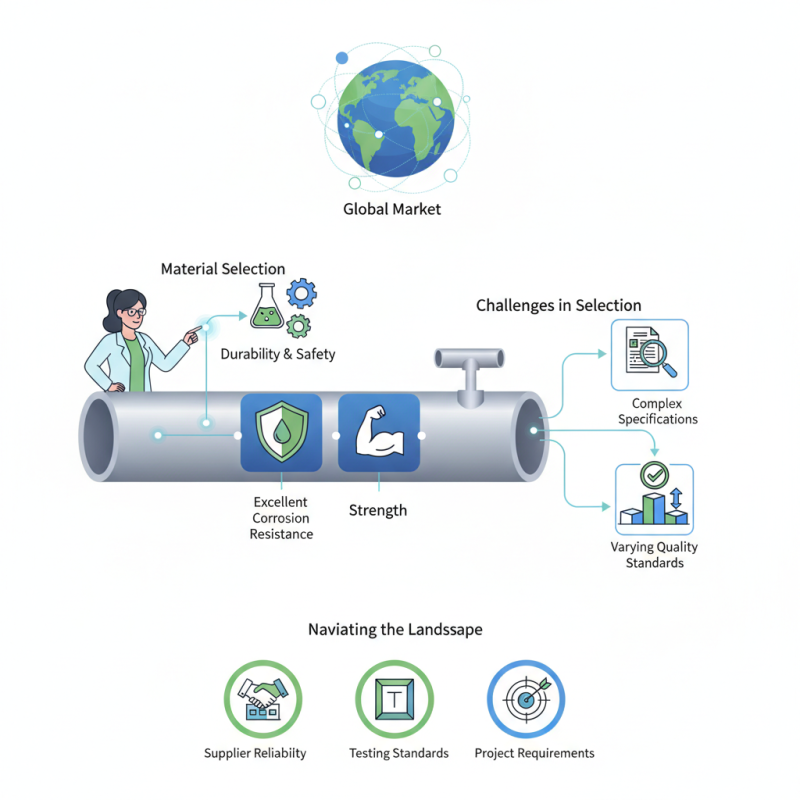
In today's global market, the demand for high-quality 304 Stainless Steel Pipe is ever-increasing. Experts like Dr. Emily Raines, a renowned materials scientist, emphasize the importance of material selection. She states, "Choosing the right stainless steel pipe can significantly impact the durability and safety of a project."
304 Stainless Steel Pipe is known for its excellent corrosion resistance and strength. These properties make it a preferred choice for various applications, from construction to industrial processes. However, many buyers face challenges when selecting the ideal pipe for their needs. Complex specifications and varying quality standards often complicate the decision-making process.
Navigating this landscape requires a keen understanding of the materials involved. The 304 Stainless Steel Pipe market offers numerous options, but not all are equal. Buyers must consider factors like supplier reliability and testing standards. With careful evaluation, they can find solutions that meet their specific project requirements.
The global market for 304 stainless steel pipes is influenced by various trends. Increased industrial activity around the world boosts the demand for durable materials. Sectors like construction, automotive, and energy are key drivers. Enhanced focus on sustainability pushes industries to choose recyclable materials such as 304 stainless steel. This transition highlights the growing environmental awareness among consumers and businesses alike.
Technological advancements play a crucial role too. Innovations in manufacturing processes enhance the efficiency and quality of stainless steel pipes. However, this rapid development sometimes leads to supply chain inconsistencies. Fluctuating raw material costs can also impact market stability. There is an ongoing challenge to balance quality with affordability. Despite these issues, the outlook remains positive for 304 stainless steel pipes, with an anticipated rise in demand globally. Buyers need to stay informed and adapt to these evolving trends for the best options ahead.
| Pipe Diameter (inches) | Wall Thickness (mm) | Length (feet) | Price per Foot (USD) | Global Demand (Tons) | Market Trend |
|---|---|---|---|---|---|
| 1 | 2.0 | 20 | 12.50 | 3000 | Stable |
| 1.5 | 2.5 | 18 | 10.75 | 2500 | Increasing |
| 2 | 3.0 | 24 | 15.00 | 4000 | Decreasing |
| 3 | 3.5 | 30 | 20.00 | 3500 | Stable |
When selecting 304 stainless steel pipes, it is essential to understand the key specifications that define their quality. These pipes are known for their excellent corrosion resistance and durability. The ASTM A312 standard outlines the requirements for different pipe types, including seamless and welded. This standard ensures that pipes can withstand various environmental conditions.
Dimension standards play a crucial role in the selection process. The nominal pipe size, wall thickness, and length must align with project specifications. For instance, outside diameter measurements should conform to the ASME B36.19 standard. Knowledge of these specifications can prevent costly errors during installation.
It's easy to overlook the importance of mechanical properties like tensile strength and yield strength. A tensile strength of at least 70,000 psi is typical for 304 stainless steel. However, buyers should be proactive in obtaining material certifications. This process can reveal critical information about the pipes' quality. Sometimes, not all manufacturers meet the established standards, leading to potential issues down the line. Ensuring compliance with these specifications is essential for long-term reliability in various applications.
The global market for 304 stainless steel pipes is vast. With numerous manufacturers vying for attention, buyers face many choices. Quality and manufacturing standards vary considerably. Some manufacturers excel in production, while others struggle with consistency.
When comparing manufacturers, examine their certifications. Quality assurance can reflect a company's reliability. Some factories may overlook proper testing, leading to potential issues. Additionally, geographical location impacts shipping times and costs. Buyers must consider these factors for budgeting and planning.
A range of finishes available for 304 stainless steel pipes can affect performance. Some suppliers offer polished options, while others focus on unpolished products. Different finishes may suit various applications. This diversity can create confusion for buyers. It's important to understand specific project requirements to make informed choices.
In 2026, the global market for 304 stainless steel pipes is expected to experience notable price fluctuations. According to recent industry reports, the average price per ton is projected to range from $2,500 to $3,200. Factors influencing this include raw material costs and market demand. Environmental regulations are tightening, leading to increased production costs, which could also affect pricing.
The demand for 304 stainless steel pipes is driven by industries such as construction and automotive. A report by Smith Research indicates that the construction sector's growth might boost demand by over 15% in the next year. However, challenges persist. Supply chain disruptions still impact manufacturing rates, leading to uncertain pricing models. Buyers should anticipate potential variations and prepare accordingly.
Market analysts suggest keeping an eye on geopolitical factors that may disrupt supply lines. Import tariffs and trade policies can cause sudden price changes. It is essential for buyers to conduct a thorough cost analysis before making large purchases. Understanding these dynamics ensures better decision-making in an unpredictable market. While the outlook is positive, inherent uncertainties remain.
Sustainability is a key focus in today's manufacturing landscape. In the production of 304 stainless steel pipes, various practices can help reduce environmental impacts. Many manufacturers are investing in energy-efficient processes. These innovations often lead to lower carbon emissions and decreased use of natural resources.
Recycling scrap metal is another important practice. When done correctly, it can significantly cut down on waste. The use of recycled materials not only conserves resources but can also lower production costs. However, challenges arise in ensuring the quality of recycled content. This variability can impact the performance of finished products.
Beyond material sourcing, managing water usage is crucial. Water-intensive processes in steel production can strain local resources. Some manufacturers implement systems to recycle process water, minimizing fresh water withdrawal. Despite these advances, the balance between production needs and environmental conservation remains delicate. Continuous improvement is essential to enhance sustainability in this industry.
: Increased industrial activity in sectors like construction and automotive boosts demand.
Many industries now choose recyclable materials like 304 stainless steel due to environmental awareness.
Innovations improve manufacturing processes but can cause supply chain inconsistencies.
Yes, specifications like ASTM A312 outline requirements for durability and corrosion resistance.
Proper alignment with project specifications prevents costly installation errors.
A tensile strength of at least 70,000 psi is expected for this material.
Raw material costs and market demand result in price fluctuations.
Stricter regulations can raise production costs, impacting overall pricing trends.
Geopolitical factors and trade policies may cause unpredictable price changes.
Conduct a thorough cost analysis to understand market dynamics and prepare for changes.
The article "2026 Best 304 Stainless Steel Pipe Options for Global Buyers" explores various facets of the 304 stainless steel pipe market in 2026. It discusses the prevailing market trends that influence global demand for these pipes, emphasizing the impact of industrial growth and technological advancements. Key specifications and standards are outlined to highlight the quality benchmarks for 304 stainless steel pipes, ensuring buyers are well-informed.
Furthermore, the article conducts a comparative analysis of manufacturers across the globe, shedding light on competitive practices and innovations. It also reviews pricing trends, providing insights into the cost factors that impact procurement strategies. Lastly, the piece addresses the sustainability practices in the production of 304 stainless steel pipes, underscoring the industry's shift towards more environmentally friendly manufacturing processes. This comprehensive overview serves as a valuable resource for global buyers seeking to navigate the 304 stainless steel pipe market effectively.

Mei Shen STEEL